


Bulk Ordering Strategies for Microblading Tool Inventory
- Bulk Ordering Strategies for Microblading Tool Inventory
- Why strategic bulk ordering matters for your microblading tool supply
- Understand demand: forecasting and usage metrics for microblading tool inventory
- Choose the right microblading tool: why the U-Curved Microblading Needle Blade stands out
- Supplier selection: wholesale vs private label and key evaluation criteria
- Cost-saving tactics: volume discounts, bundling, and cost-per-use
- Inventory management systems and reorder formulas
- Blade selection comparison: U-curved vs straight vs round (quick reference)
- Quality control, testing, and batch verification for a microblading tool
- Storage, shelf life, and sterility practices for microblading tool inventory
- Logistics, lead time management, and import considerations
- Negotiating MOQs, payment terms, and private label agreements
- Risk management: balancing overstock, obsolescence, and contamination
- Implementation checklist and sample procurement timeline
- Brand advantage: why QM Makeup’s U-Curved Microblading Needle Blade supports smart bulk purchasing
- Frequently Asked Questions (FAQ)
- Contact sales / View product
- References and authoritative sources
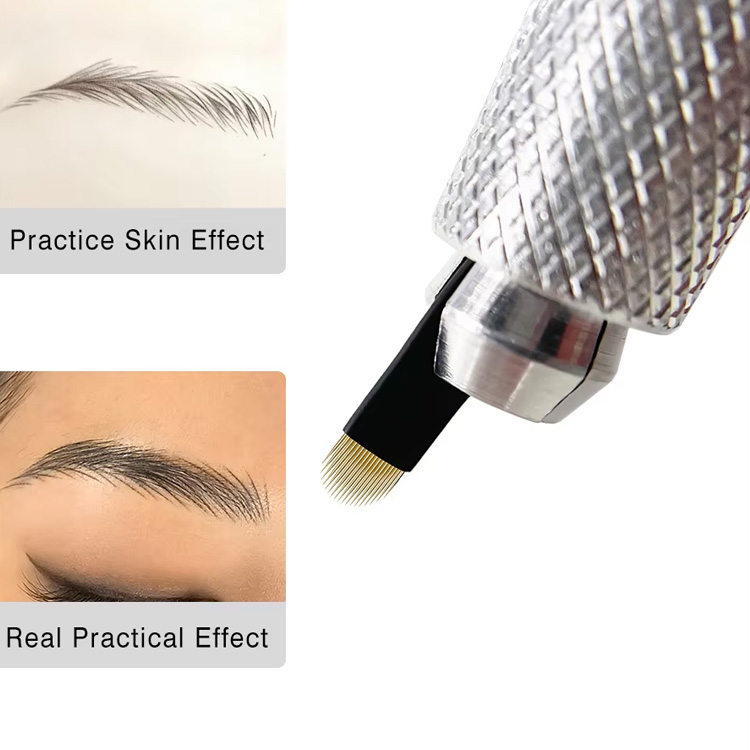
Bulk Ordering Strategies for Microblading Tool Inventory
Why strategic bulk ordering matters for your microblading tool supply
Microblading is a precision-driven service that depends on consistent, high-quality microblading tool supplies. Buying the right microblading tool in bulk can reduce per-unit cost, shorten downtime between sessions, ensure consistent results for clients, and enable scaling of operations. However, bulk purchasing also introduces risks—overstock, tool degradation, and cashflow strain—if not managed intentionally. This guide walks through practical strategies to buy smart, focusing on the U-Curved Microblading Needle Blade as a representative high-performance option.
Understand demand: forecasting and usage metrics for microblading tool inventory
Accurate forecasting is the foundation of smart bulk ordering. Start by tracking these baseline metrics for at least 3–6 months:
- Number of microblading treatments per week/month.
- Average number of blades used per treatment (including practice and failed attempts).
- Wastage rate (damaged, expired, or contaminated tools).
- Lead time from order to delivery from each supplier.
With these metrics you can calculate reorder points and safety stock. For example, if you perform 200 treatments per month and each treatment uses 1.2 blades on average, monthly consumption is 240 blades. If supplier lead time is 3 weeks and you want two weeks of safety stock, you can compute an appropriate order quantity (see Inventory Management section for formulas and example table).
Choose the right microblading tool: why the U-Curved Microblading Needle Blade stands out
The choice of blade affects stroke quality, client pain, and pigment retention. Discover the QM Makeup U-Curved Microblading Needle Blade—perfect for precision and durability. Available for wholesale and private label, this microblading tool ensures professional results. The U-curved geometry helps create more natural hair strokes, reduces skin trauma when used correctly, and is engineered for consistent pigment pickup. For clinics seeking a reliable, private-label-ready microblading needle blade, the U-Curved option presents a compelling balance of performance and brand flexibility.
Supplier selection: wholesale vs private label and key evaluation criteria
When selecting a supplier for bulk microblading tool purchases, consider these dimensions:
- Quality consistency: Batch-to-batch variability must be low for consistent treatments.
- Regulatory compliance and sterilization standards: Ensure the supplier follows medical device guidelines relevant to your region.
- MOQ (Minimum Order Quantity) and pricing tiers: Compare the cost per unit at increasing volumes.
- Private label capability: If you want to build QM Makeup, confirm labeling, packaging, and SKU customization options.
- Lead times and logistics reliability: Regular, predictable deliveries reduce safety stock needs.
Wholesale purchasing is ideal for clinics that prioritize cost-efficiency and immediate stock. Private label agreements are better for brands that want to market a signature microblading tool while still leveraging supplier manufacturing strengths.
Cost-saving tactics: volume discounts, bundling, and cost-per-use
Bulk purchasing saves money via tiered pricing, but maximizing savings requires strategy:
- Negotiate volume discounts tied to rolling forecasts rather than single large orders—suppliers appreciate predictable demand.
- Create bundles (needle blade + practice micro-skin sheets + pigment swatch) to increase average order value and reduce per-item packaging costs.
- Calculate cost-per-use: include blade cost, sterilization (if applicable), packaging, and disposal costs. This helps compare cheaper blades that may raise indirect costs due to higher wastage.
Inventory management systems and reorder formulas
Use simple formulas and a basic inventory management system (even a spreadsheet will work at small scale) to determine order timings and quantities:
- Reorder Point (ROP) = (Average Daily Usage x Lead Time in Days) + Safety Stock
- Economic Order Quantity (EOQ) = sqrt( (2 x Demand x Ordering Cost) / Holding Cost ) — useful for optimizing order size where ordering and holding costs are significant.
Example table: EOQ scenarios for a clinic using 2,880 blades/year (240/month) with differing ordering costs and holding rates:
| Annual Demand | Ordering Cost (per order) | Holding Cost (per blade/year) | EOQ (blades) |
|---|---|---|---|
| 2,880 | $25 | $0.20 | sqrt((2*2880*25)/0.2) ≈ 536 |
| 2,880 | $50 | $0.20 | sqrt((2*2880*50)/0.2) ≈ 758 |
These calculations show how order frequency should change as ordering costs or holding costs vary.
Blade selection comparison: U-curved vs straight vs round (quick reference)
| Blade Type | Best For | Stroke Style | Notes |
|---|---|---|---|
| U-Curved Microblading Needle Blade | Natural hair strokes, precision shaping | Fine, tapered strokes with controlled pigment flow | Preferred for realistic hair simulation; often available wholesale and private label |
| Straight/Flat | Bold strokes, thicker hairlines | Uniform, stronger pigment deposition | Good for clients needing more pigment or reconstructive work |
| Round | Shading or soft hair strokes | Soothing, diffuse strokes | Used for Ombre or soft shading in eyebrows |
Quality control, testing, and batch verification for a microblading tool
To reduce clinical variability and liability, implement these checks for every inbound bulk shipment:
- Lot verification: check batch numbers against supplier certificate of conformity.
- Visual inspection: ensure blades are intact, packaging sealed, and no corrosion present.
- Random functional testing: sample blades in a controlled setting to verify stroke consistency and pigment pickup.
- Document retention: keep supplier paperwork, sterilization certificates, and quality reports for regulatory audits.
Storage, shelf life, and sterility practices for microblading tool inventory
Proper storage preserves blade integrity and complies with safety practices. Key rules:
- Store in a cool, dry environment away from direct sunlight and corrosive chemicals.
- Respect the manufacturer’s expiration dates and single-use recommendations.
- Maintain an organized FIFO (First In, First Out) system to minimize expired stock.
- For pre-sterilized disposable blades, confirm sterility indicators are intact before use.
Failure to follow storage and sterility guidance can increase infection risk and regulatory exposure.
Logistics, lead time management, and import considerations
International suppliers often offer lower unit costs but longer lead times. Consider these logistics items:
- Customs clearance time and potential tariffs—factor these into total landed cost.
- Use consolidated shipments to reduce per-unit shipping costs when ordering frequently.
- Maintain a safety stock proportional to supplier lead time variability to avoid stockouts.
Negotiating MOQs, payment terms, and private label agreements
Effective negotiation reduces cash tied up in inventory:
- Ask suppliers for graduated MOQs—smaller initial runs with the right to scale.
- Negotiate payment terms (e.g., 30/70 split) to improve cashflow.
- For private label projects, require clear specifications for artwork approval, sample runs, and quality guarantees before full production.
Risk management: balancing overstock, obsolescence, and contamination
Over-ordering can tie up capital and increase obsolescence risk if product specs evolve or regulations change. To mitigate risks:
- Use rolling forecasts and monthly reviews of actual vs. planned usage.
- Spot-check suppliers for process improvements and stay informed about standards and incoming regulations.
- Maintain a small emergency supplier roster in case of unexpected supply disruptions.
Implementation checklist and sample procurement timeline
Checklist before placing a bulk order:
- Complete 3-month usage audit.
- Verify supplier certifications and sterilization documentation.
- Confirm MOQs, lead times, and discount tiers.
- Run quality control checks on initial sample lot.
- Set up inventory tracking entries and reorder points.
Sample timeline for a private label order (approximate):
- Week 1–2: Product specification and sample approvals.
- Week 3–6: Initial production run and QC sampling.
- Week 7–9: Shipping and customs clearance.
- Week 10: Stock received, inspected, and entered into inventory.
Brand advantage: why QM Makeup’s U-Curved Microblading Needle Blade supports smart bulk purchasing
QM Makeup’s U-Curved Microblading Needle Blade is designed for precision and consistent performance, making it an efficient choice for clinics planning bulk procurement. Advantages include:
- Consistent stroke quality that reduces retries and pigment waste.
- Wholesale pricing and private label options that help clinics build branded product lines without investing in manufacturing.
- Supplier support for MOQ negotiation and predictable lead times to help manage cashflow and inventory levels.
These factors translate into lower cost-per-treatment and improved client outcomes—key goals for any semi-permanent makeup practice.
Frequently Asked Questions (FAQ)
Q: How many U-Curved Microblading Needle Blades should I order for a new studio?
A: Start by estimating treatments per month. For a small studio doing 50 treatments/month (1.2 blades/treatment), monthly usage ≈ 60 blades; order a 3-month supply (180 blades) as a safe starting point while you validate actual usage and wastage rates.
Q: Are microblading blades reusable?
A: No. Most microblading blades are intended for single use due to infection risk. Always follow manufacturer instructions and local health regulations.
Q: What regulatory documentation should I request from a supplier?
A: Request certificates of sterilization, manufacturing conformity, batch/lot numbers, and any regional compliance documentation (for example, CE for EU markets or equivalent). Keep these on file for audits.
Q: Can I private label the U-Curved Microblading Needle Blade?
A: Yes. QM Makeup offers private label options. Confirm MOQ, design requirements, and lead times with sales before committing.
Q: How do I calculate safety stock for variable demand?
A: Calculate average daily usage and multiply by lead time, then add buffer based on demand variability (e.g., standard deviation * service factor). Simpler: keep 10–30% of monthly usage as safety stock if variability is modest.
Contact sales / View product
To explore wholesale pricing or private label options for the U-Curved Microblading Needle Blade, contact QM Makeup sales at [email protected] or visit https://qmmakeup.com/u-curved-microblading-needle to view product specifications and request samples.
With bulk purchasing strategies defined, professional buyers must ensure that increased order volumes still meet regional regulations, hygiene standards, and certification requirements. A structured compliance framework can be found in:
Regulatory Compliance for Microblading Tools: A Buyer’s Checklist
References and authoritative sources
- Wikipedia — Microblading: https://en.wikipedia.org/wiki/Microblading
- Society of Permanent Cosmetic Professionals (industry guidelines): https://www.spcp.org/
- U.S. Food & Drug Administration — Tattoos & Permanent Makeup: https://www.fda.gov/cosmetics/cosmetic-products/tattoos-permanent-makeup
Custom pigment tattoo ink Manufacturers and Suppliers
DIY Lash Lift vs Professional Eyelash Kit: Pros and Cons
Wholesale microblading aftercare balm manufacturer and supplier in 2026
Top 5 eyelash glue Company List and Products Compared
Handmade pen
What size of microblading pen should I choose?
Currently, the more popular thicknesses are 0.16mm and 0.18mm; the popular sizes are 16U, 18U, and 18P. How to choose a microblading brow tools that suits you can refer to the advice on choosing a best microblading blade to use, which depends largely on several factors, including the type of eyebrow tattoo, the degree of detail required, and personal tattooing skills. Here are some basic guidelines:
Type of eyebrow tattoo: Detail and line tattoo: Finer lines and details can usually be achieved with finer needles (such as 0.16mm or 0.18mm).
Filling and shading: Slightly thicker needles (such as 0.20mm or 0.25mm) may be required to achieve better color coverage and shading effects on the skin.
Personal tattooing technique: Novice tattoo artists may tend to use thicker needles to minimize the operation time on the skin, while experienced tattoo artists have the flexibility to choose needles of different thicknesses to achieve more diverse effects.
Skin type: The texture and thickness of different skin will also affect the choice of needles. Thicker skin may require slightly thicker needles to ensure color and lines penetrate effectively.
Hair Condition: The thickness of your client’s natural hair is also an important factor in choosing needle thickness. Thicker hair requires slightly thicker needles to ensure lines are consistent with the natural hair.
Micro Blade
What size needle for microblading eyebrows? U-curved needle or a slope needle?
Slope Needle: The tip of a tilting needle usually presents a beveled angle. This shape is suitable for detailed line and contour work and is commonly used for contour and fine areas of tattoos, but may require some skill to ensure smoothness and consistency of the line.
U-curved Needle: U-curved needles have a U-curved tip and usually consist of multiple needles. The U-curved needle design distributes ink more evenly across the skin. It is more suitable for color filling and shading effects and gradient effects on large areas, and can cover a larger area in a short period of time. However, you need to control the pressure and speed to avoid uneven color.
To summarize, the choice of needle depends mainly on the design of the eyebrows semi permanent makeup and the desired effect.
Certification
What guarantees do you have for the quality of your products?
Some of our products have certificates, for example, our professional eyelash lifting kit have MSDS certificates, our professional rotary tattoo machine and microblade supplies have CE certificates,our tattoo pigment have CE, MSDS, REACH certificates, details you can contact us to learn more.
Customized service
Are there any additional charges for customized services?
Customized services may be subject to appropriate customization fees based on your specific requirements, which can be negotiated with our sales team.
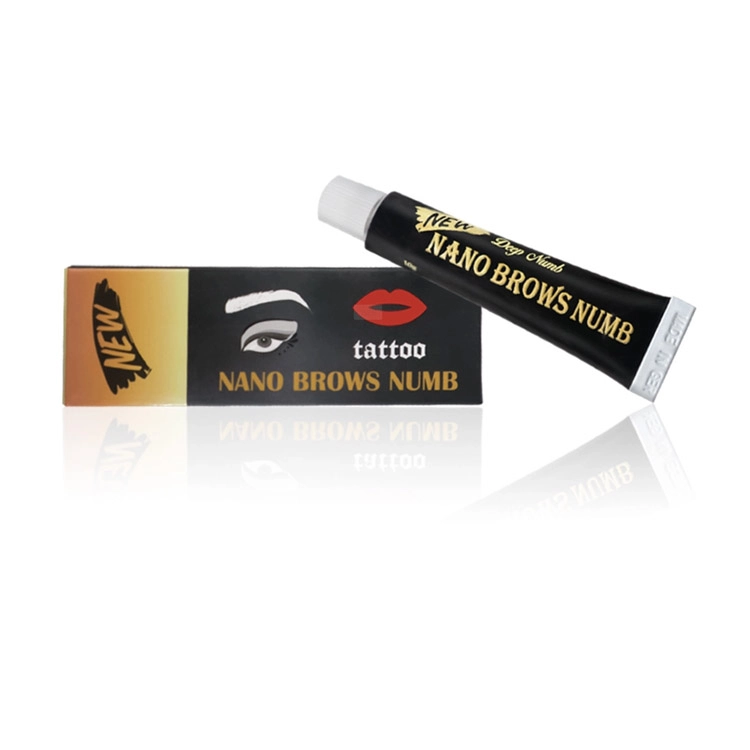
Tattoo Numbing Patches
What are the active ingredients of the numbing patch?
Our anesthetic product formula is very mature and stable, and has been used for over 10 years. The main active ingredients are lidocaine, prilocaine, and epinephrine. Compared to single-ingredient lidocaine preparations, these ingredients work synergistically to effectively prolong the duration of sedation and even help reduce bleeding at the tattoo site.

Professional Pre Inked Eye Brow Mapping String 30m
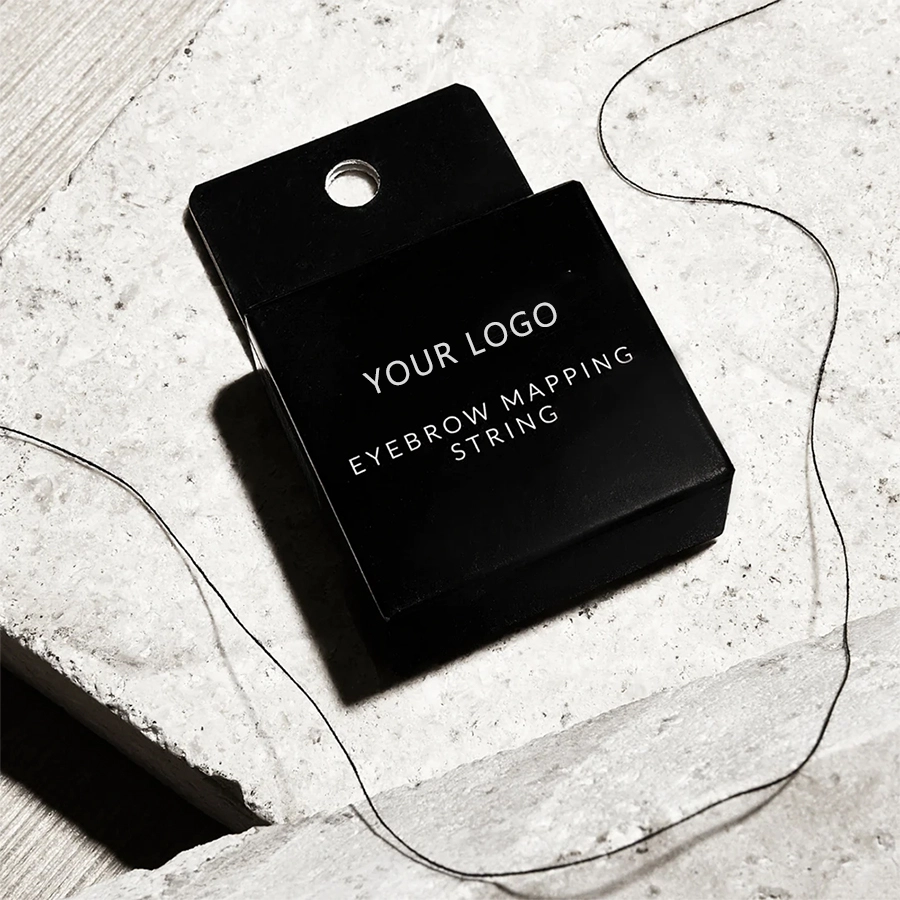
Microblading Pre-inked Mapping String Line 10m
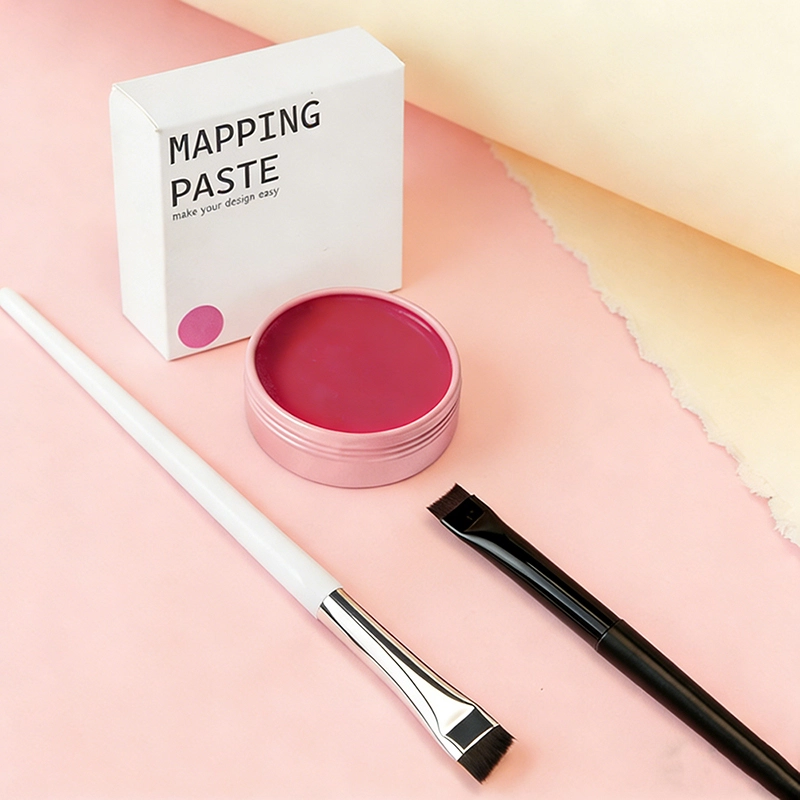
Pre-inked Mapping Ultra-Fine Eyebrows Eyeliner Blade Fan Brush

Instagram
Facebook
YouTube