


How to Read Eyelash Lift Kit Labels and Ingredients
- Understanding Product Labels: Why It Matters
- What information must be on a cosmetic or eyelash lift kit label?
- Label clues that indicate professional vs. consumer-grade formulas
- Decoding Key Ingredients in an Eyelash Lift Kit
- Primary active ingredients: perming/reducing agents
- Neutralizers and oxidizing agents
- Conditioners, protectants and additives
- Safety, Testing and Regulatory Landscape
- Patch testing and client safety protocols
- Regulatory signals to spot on packaging
- Documented adverse events and why ingredient transparency matters
- Practical Guide: How I Read and Evaluate an Eye Lash Lift Kit
- Step-by-step label checklist I use
- Common label wording and what it implies
- Ingredient comparison table
- Choosing a Professional Lash Lift Kit and Working with Suppliers
- Questions I ask suppliers before buying
- Why manufacturing standards and traceability matter
- Comparing kits: performance vs. safety
- QM Makeup: Our Capabilities, Products and How We Support Partners
- Practical Aftercare, Troubleshooting and Incident Response
- Best-practice aftercare I recommend to clients
- Managing accidental exposure and adverse reactions
- Record keeping and client consent
- Frequently Asked Questions (FAQ)
- 1. What should I do if a client’s eye stings during a lash lift?
- 2. How long does a lash lift kit’s curl typically last?
- 3. Can I use a lash lift kit if a client has eyelash extensions?
- 4. Are natural or organic labeled kits safer?
- 5. How do I verify a supplier’s GMP or ISO claims?
- 6. Do eyelash lift kits require registration with authorities?
- Closing and Contact
I write from years of hands-on experience in semi-permanent makeup and eyelash beauty. In this guide I show you exactly how to read an eye lash lift kit label, what the common active and accessory ingredients do, how to identify safety and regulatory cues on packaging, and how to choose a professional kit for salons or private labeling. I include practical checklists, a comparison table of typical ingredients and their risks, and evidence-based references to regulatory sources so you can verify claims and protect clients.
Understanding Product Labels: Why It Matters
What information must be on a cosmetic or eyelash lift kit label?
When I review an eye lash lift kit label, I first look for the basics required by regulators: product identity, net contents, ingredient list (usually using INCI names), manufacturer or distributor contact, country of origin, batch/lot number and expiration or manufacture date. For authoritative requirements, see the European cosmetics regulation (Regulation (EC) No 1223/2009) and the U.S. Food and Drug Administration guidance on cosmetics (FDA Cosmetics Laws & Regulations).
Label clues that indicate professional vs. consumer-grade formulas
Professional kits often include: explicit for professional use language, higher concentration of active agents, batch numbers plus expiry, INCI ingredient lists, safety directions and mandatory patch-test instructions. Consumer kits tend to simplify language and may omit concentration details. On a label, I consider the presence of INCI names (International Nomenclature of Cosmetic Ingredients) a mark of transparency—learn more at the INCI overview (INCI (Wikipedia)).
Decoding Key Ingredients in an Eyelash Lift Kit
Primary active ingredients: perming/reducing agents
The core of any lash lift kit is the reducing agent that temporarily breaks disulfide bonds in keratin so lashes can be reshaped. Common reducing agents include ammonium thioglycolate (a perming salt) or cysteamine derivatives. These are potent chemicals: their function is well known in hair perming chemistry—reducing disulfide bonds to allow physical reshaping—so look for the INCI name and concentration when it is provided.
Neutralizers and oxidizing agents
After reduction, a neutralizer reforms disulfide bonds. Neutralizers commonly contain oxidizing agents such as hydrogen peroxide or sodium bromate derivatives. If the label lists neutralizer but not active chemistry, request the INCI or technical data sheet (TDS) from the supplier before use.
Conditioners, protectants and additives
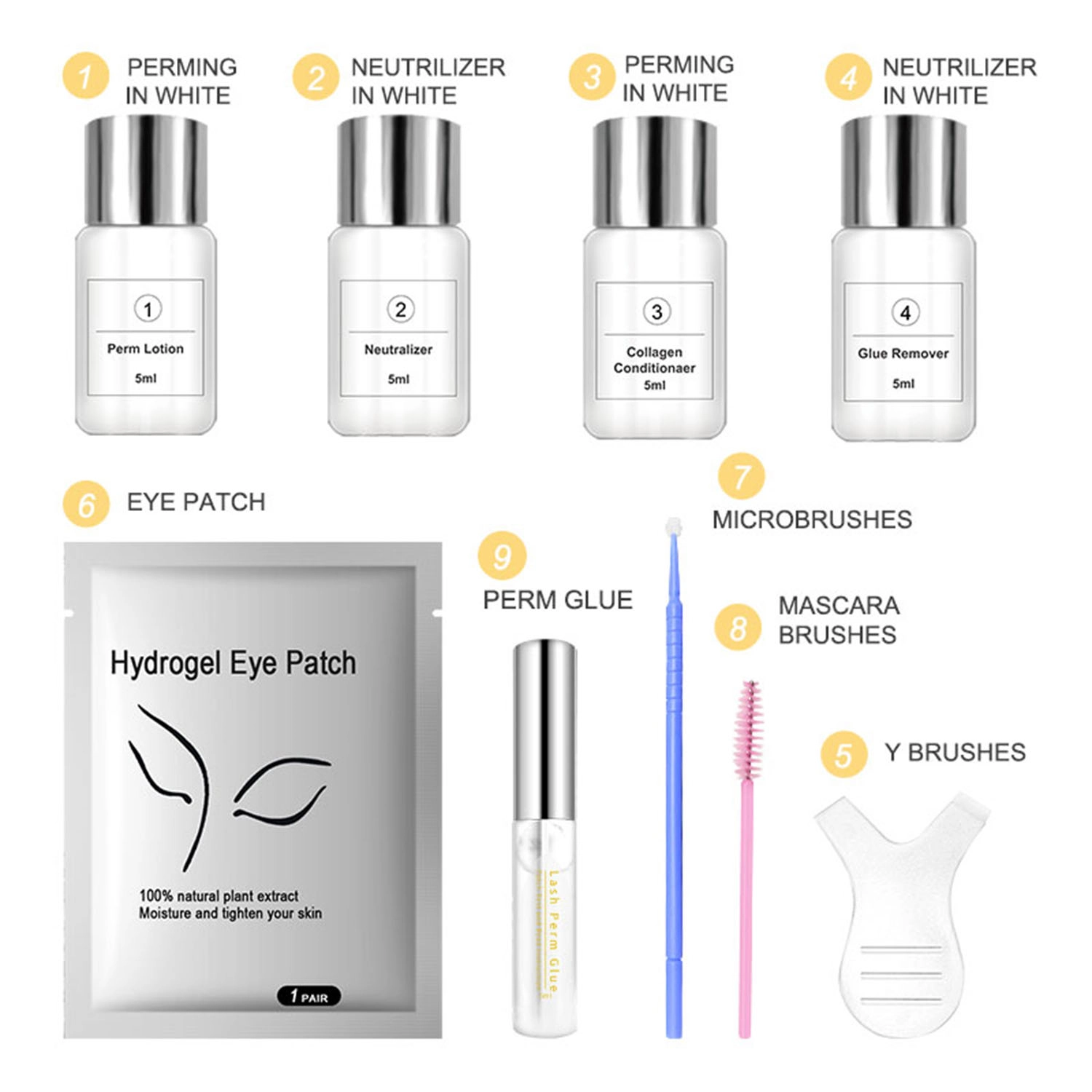
High-quality kits include conditioning agents (hydrolyzed keratin, panthenol, arginine), humectants (glycerin), and film-formers (polyvinyl alcohol or acrylates copolymers) to protect lashes during processing. These ingredients reduce brittleness and enhance curl retention. If a kit lacks any conditioning ingredients, expect more potential damage or higher aftercare burden.
Safety, Testing and Regulatory Landscape
Patch testing and client safety protocols
I always insist on a patch test 24–48 hours before a full lash lift application. A thorough label will include a patch-test recommendation and first-aid instructions for accidental eye exposure. Because reducing agents and neutralizers can irritate or burn the eyelid and eye surface, patch testing plus client medical history (allergy to thiols, prior eye surgeries, eyelid skin conditions) is essential.
Regulatory signals to spot on packaging
Labels mentioning compliance with ISO/GMP (e.g., ISO 22716 Cosmetics GMP) or listing a manufacturing standard and batch traceability are stronger indicators of quality manufacturing. For reference on good manufacturing practice for cosmetics see ISO resources (ISO 22716) and industry guidance from regulatory agencies listed earlier.
Documented adverse events and why ingredient transparency matters
There are documented ocular injuries and allergic reactions linked to lash treatments in medical literature. Transparency about ingredient identity and concentration allows clinicians to diagnose, manage reactions and report adverse events to authorities. You can search peer-reviewed reports via PubMed for case studies; always cross-check product ingredients when adverse events occur.
Practical Guide: How I Read and Evaluate an Eye Lash Lift Kit
Step-by-step label checklist I use
- Confirm product identity and intended use (lash lift vs. lash perm).
- Locate full ingredient list in INCI; flag any unknown chemical names for supplier clarification.
- Check for patch test instruction, first-aid treatment, and CE or GMP/ISO claims with verifiable certificate numbers.
- Look for batch/lot number and expiry date; absence of these is a red flag for professional use.
- Request technical data sheet (TDS) and safety data sheet (SDS) if not provided on packaging.
Common label wording and what it implies
Professional use only—higher active concentration, requires trained operator. Hypoallergenic—investigate which tests back this claim; the term is not strictly regulated in many regions. EN/ISO certified—ask for certificate. INCI-listed ingredients—good; you can cross-reference on databases.
Ingredient comparison table
| Ingredient / Group | Function in lash lift | Typical risks or cautions | Notes / Evidence |
|---|---|---|---|
| Ammonium Thioglycolate | Reducing agent (breaks keratin bonds) | Can irritate skin/eyes; strong odor; allergy risk | Common in perms; presence requires careful handling (see FDA guidance and hair perm chemistry literature) |
| Cysteamine / Cysteamine Hydrochloride | Alternative reducing agent with shorter processing times in some formulas | Potential irritation; less common—ask for concentration | Used in some cosmetic relaxers; supplier TDS recommended |
| Hydrogen Peroxide / Sodium Bromate | Neutralizer / oxidizer to reform bonds | Oxidative irritant; high concentrations can damage hair/skin | Neutralizer chemistry is critical for final lash integrity |
| Hydrolyzed Keratin / Panthenol | Conditioning/protective agents | Generally low risk; may reduce brittleness | Beneficial additives; presence indicates a professionally formulated kit |
| Polyvinyl Alcohol / Acrylates Copolymer | Adhesive or film former for shield attachment | Potential eye irritant if improperly applied | Prefer water-soluble adhesives in salon practice for safer removal |
Choosing a Professional Lash Lift Kit and Working with Suppliers
Questions I ask suppliers before buying
I request: (1) full INCI ingredient list; (2) SDS and TDS documents; (3) batch traceability and expiry policy; (4) evidence of GMP/ISO or third-party audits; (5) scope for private labeling/OEM. Reputable suppliers provide documentation promptly and transparently.
Why manufacturing standards and traceability matter
Traceability (lot numbers, QA batch records) allows a supplier to act fast if an adverse event occurs. Manufacturing standards (e.g., ISO 22716) reduce contamination risk and variation between batches, which matters when you rely on consistent curl times and product performance.
Comparing kits: performance vs. safety
When I compare kits I weigh curl retention and ease of use against client safety. A kit that promises very fast processing but lacks conditioners or visible neutralizer composition is suspect. Demand SDS and technical performance data (curl retention tests, stability data) for objective comparison.
QM Makeup: Our Capabilities, Products and How We Support Partners
QM Makeup was established in 2005; we specialized in the field of semi-permanent makeup and eyelash tattoo beauty, and we are committed to becoming a leading company in the industry. We specialize in permanent makeup and eyelash beauty products, providing professional wireless tattoo machines, microblading machines, semi-permanent makeup ink, tattoo skin for practice, tattoo numb cream, a professional lash lift kit, the best lash lift and tint kit, professional eyelash glue and eyelash extension lashes products. Our company integrates the distribution, wholesale, private labeling and OEM processing on a large scale. We provide customers with a full range of customized branding solutions to help our partners maximize business value. Our production base covers an area of 10,000 square meters and has independent research and development and production capabilities, helping customers achieve product customization and providing one-stop tattoo supplies brand solutions.
As a partner I’ve evaluated QM Makeup products for both performance and compliance. Key strengths: rigorous batch traceability, integrated OEM/private label workflows, and a product line spanning tattoo machines, tattoo ink, microblading, tattoo supplies and false eyelashes. If you need a professional eye lash lift kit that includes a clear INCI list, TDS and SDS for salon compliance, QM Makeup can supply bulk and white-label solutions. Visit our website at https://www.qmmakeup.com or contact us at [email protected] for documentation and MOQ details.
Practical Aftercare, Troubleshooting and Incident Response
Best-practice aftercare I recommend to clients
- Avoid water, steam and mascara for 24–48 hours depending on product instructions.
- Use a mild lash conditioner (look for panthenol/hydrolyzed keratin) and avoid oil-based removers that shorten curl.
- Record product batch/lot used on client record for traceability.
Managing accidental exposure and adverse reactions
If product enters the eye: flush immediately with copious clean water and seek medical attention. If a client develops delayed redness or itching, document symptoms, photograph, and encourage immediate medical review. Report incidents to the supplier and relevant regulatory body. The FDA provides general guidance on cosmetic adverse event reporting (FDA Cosmetics Laws & Regulations).
Record keeping and client consent
Always have a signed consent form noting patch-test results, product batch/lot, and known allergies. I find that good documentation protects both client and technician and supports corrective action if a supplier recall is ever necessary.
Frequently Asked Questions (FAQ)
1. What should I do if a client’s eye stings during a lash lift?
Stop the procedure immediately, remove products using sterile damp cotton swabs, flush the eye with clean water, and seek ophthalmic care if symptoms persist. Document lot numbers and the products used.
2. How long does a lash lift kit’s curl typically last?
Most professional kits produce a lift lasting 6–8 weeks depending on lash growth cycle and aftercare. Proper neutralization and conditioning increase longevity.
3. Can I use a lash lift kit if a client has eyelash extensions?
No — do not perform a lash lift on extensions. Extensions interfere with perming chemistry and removal of glue/adhesive can harm natural lashes.
4. Are natural or organic labeled kits safer?
Natural or organic labels do not guarantee safety; check INCI names and SDS. Some natural components can still be allergenic. Evaluate on ingredient transparency and supplier documentation.
5. How do I verify a supplier’s GMP or ISO claims?
Request copies of certificates, including certification body details and certificate numbers. Cross-check the certifier’s website and ask for on-site audit reports or third-party quality test results.
6. Do eyelash lift kits require registration with authorities?
Regulations vary by country. In the EU, cosmetic products must comply with Regulation (EC) No 1223/2009 and be notified via the CPNP. In the U.S., cosmetics aren’t pre-approved by FDA but manufacturers are responsible for safety and proper labeling. Always consult local regulations.
Closing and Contact
Reading an eye lash lift kit label is a practical skill that protects client safety and supports salon reputation. Look for INCI transparency, SDS/TDS documents, batch traceability and clear patch-test and first-aid instructions. If you need a reliable professional lash lift kit supplier with OEM/private label support, technical documentation and large-scale manufacturing capacity, QM Makeup offers a full suite of solutions. Visit https://www.qmmakeup.com or email [email protected] to request datasheets, certificates and pricing. For quick next steps: request a sample kit, demand SDS/TDS, and run a patch test 24–48 hours before first client application.
References and resources: European cosmetics regulation (Regulation (EC) No 1223/2009), FDA cosmetics guidance (FDA Cosmetics Laws & Regulations), INCI overview (INCI (Wikipedia)), ISO 22716 GMP information (ISO 22716).
QM Makeup Best professional microblading pen manufacturers and supplier brands
QM Makeup Best professional tattoo numbing cream manufacturers and supplier brands
How to Maintain Lifts After Using an Eyelash Lift Kit
Best professional microblading tool manufacturers and supplier brands
Lash lift kit
How long is your production time?
For general orders, we usually complete production in 10-15 days after you confirm the order details and process the deposit. For bulk orders, the production time may be extended to 20-30 days.
How long does the lifting effect last?
On average, the lash lifting effect lasts for 2-3 months, depending on the clients eyelashes individual differences and the time you takes for lash lift procedure of soften (perm lotion) and set (neutralizer).
Does the perming lotion contain the ingredient “Cysteamine” ?
Yes, some formulas contain the ingredient “Cysteamine”, then some contain the ingredient “Thioglycolic acid”. The active ingredient of the perming lotion is a reducing agent, which acts to break the disulfide bonds in the eyelash. Commonly used reducing agents are Thioglycolic acid and Cysteamine. Compare to Cysteamine, Thioglycolic acid has a strong reducing power.
Pre-inked Mapping String
What color do you have for the mapping ink?
We provide different color options for pre-inked mapping string.
For 10m mapping string: black / white / pink
For 30m mapping string (wet ink): black / white / pink
For 30m mapping string (dry ink): black / white / pink / purple / brown
Customized service
Can I get samples first for customization?
Yes, we support sample orders. Since your customization is different from regular goods, we may need to produce or process it separately, so we need to charge a corresponding sample fee, which can be refunded when you place a formal order.

Professional Pre Inked Eye Brow Mapping String 30m
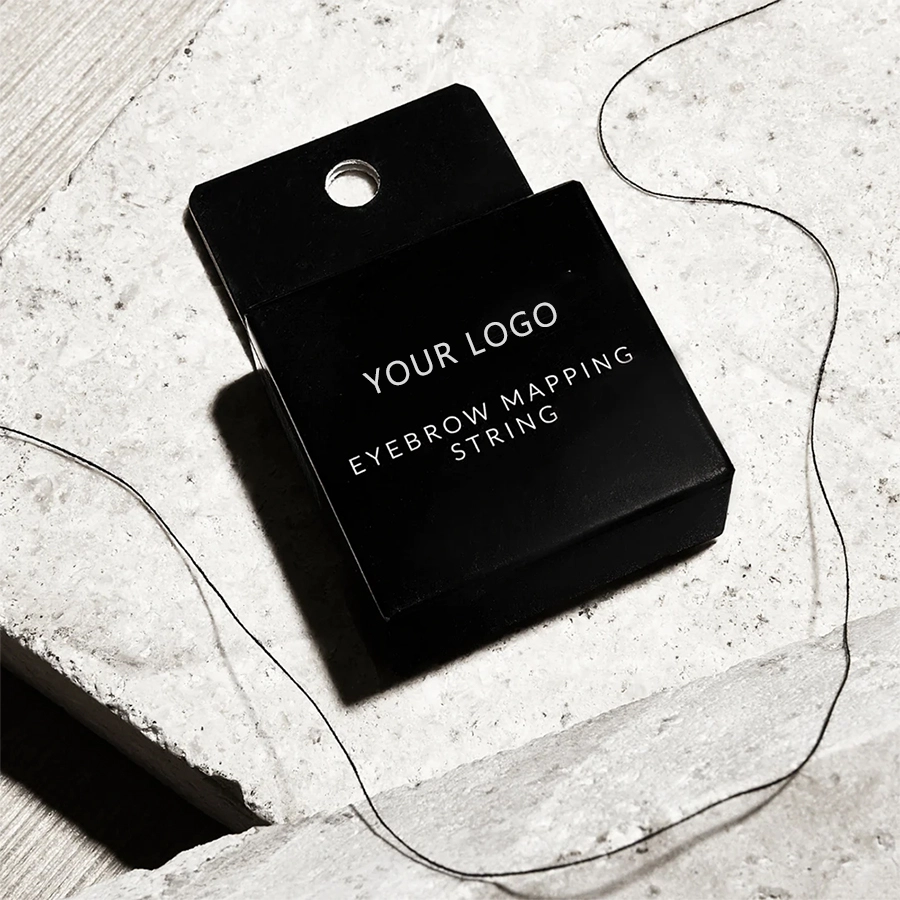
Microblading Pre-inked Mapping String Line 10m
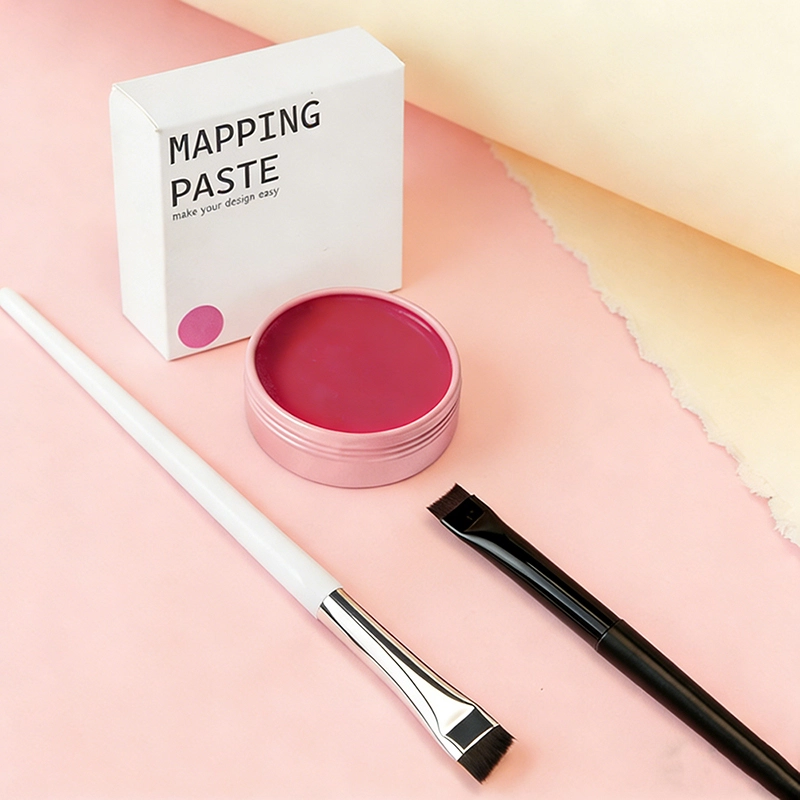
Pre-inked Mapping Ultra-Fine Eyebrows Eyeliner Blade Fan Brush

Instagram
Facebook
YouTube