


Microblading Machine Needles & Cartridges: Buyer's Guide
- Why machine microblading is different
- Technique and outcome differences
- Benefits and risks compared with manual microblading
- Needle types and cartridges explained
- Common needle groupings and their uses
- Needle diameter and penetration control
- Cartridges versus fixed needles
- How to choose needles & cartridges for your machine
- Compatibility and fit
- Sterility, packaging and regulatory compliance
- Materials and coatings
- Safety, sterilization and disposal — best practices
- Single use policy and sharps disposal
- Workspace and device cleaning
- Allergy and cross-contamination screening
- Practical selection guide: matching needle to client need
- Skin types and needle strategy
- Stroke length, angle and machine settings
- Comparison table: needle/cartridge choices at a glance
- Vendor selection: what I check before buying
- Transparency and quality documentation
- Samples, warranties and tech support
- Price vs. value
- About QM Makeup and how we support professionals
- Company profile and manufacturing strengths
- Product offerings and services
- Why I recommend QM Makeup
- Advanced tips and troubleshooting
- When strokes blur or feather
- Poor pigment retention
- Record-keeping and incident readiness
- Frequently Asked Questions (FAQ)
- 1. Can I use microblading blades and machine cartridges interchangeably?
- 2. Are cartridges always single-use?
- 3. How do I choose the right needle diameter?
- 4. What sterilization proofs should I expect from suppliers?
- 5. How do I handle needle-related allergic reactions?
- 6. Where can I find training resources on machine microblading safety?
Microblading with a machine requires different choices than manual blade work. In this guide I summarize the practical, regulatory and performance factors you must consider when buying needles and cartridges: needle configuration, diameter, cartridge systems, sterilization and disposal, machine compatibility, clinical safety and supplier reliability. Combining industry standards and my field experience, I show what to look for to improve stroke quality, client comfort and shop safety.
Why machine microblading is different
Technique and outcome differences
When I perform microblading with a machine, the controlled mechanical motion produces consistent stroke depth and speed. Unlike manual blades which rely on hand angle and pressure for hair-like strokes, cartridges let you select needle groupings and diameters to adapt to hair density, skin type and desired style. That consistency reduces variability and can shorten learning curves for new artists.
Benefits and risks compared with manual microblading
Benefits include repeatable penetration depth, easier blending into powdered/ombre effects, and compatibility with wireless rotary devices for mobility. Risks center on using the wrong needles (too large or too deep) and improper sterilization or re-use. Regulatory scrutiny for needle safety is higher: the FDA advises caution around tattoo and permanent makeup tools and inks; review their guidance here FDA: Tattoos & Permanent Makeup.
Needle types and cartridges explained
Common needle groupings and their uses
In machine microblading we use needle groupings adapted from tattooing. The most relevant are:
- Nano / single (1-point) and 3-point round liners — ideal for precise hair-stroke work.
- Round liner (RL) sets — for crisp lines and single-stroke hair effects on normal skin.
- Round shader (RS) and magnum (M) configurations — for shading, soft fills, and ombré brows.
Needle diameter and penetration control
Needle diameters commonly used in PMU and machine microblading range from ultra-fine (~0.18 mm) to 0.35 mm or larger. Thinner needles allow finer strokes but may require more passes on coarse skin. Thicker needles deposit more pigment per pass and are useful for oily or scarred skin. Choosing diameter depends on client skin type and the device's stroke characteristics.
Cartridges versus fixed needles
Cartridges are sealed, disposable modules that hold a needle grouping and often include a membrane barrier. They simplify loading, reduce cross-contamination risk and allow quick swapping between configurations during procedures. Fixed needles require more time to change and pose higher contamination risk; for professional settings I recommend sterile single-use cartridges only.
How to choose needles & cartridges for your machine
Compatibility and fit
Not all cartridges fit every machine. Before buying, I verify the cartridge system (e.g., proprietary snap-fit, universal hybrid) and confirm compatibility with the needle bar length, stroke type and grip design of my rotary or wireless tattoo machine. Manufacturers usually list compatible devices; if not, request a sample or compatibility chart.
Sterility, packaging and regulatory compliance
Always buy needles supplied pre-sterilized in individual, tamper-evident blister packs. Look for sterilization method (ETO, gamma) and an expiration or sterilization date. Follow FDA recommendations on tattoo tools and permanent makeup supplies (FDA guidance) and international device standards such as ISO 13485 for medical device quality management (ISO 13485).
Materials and coatings
Needles are generally stainless steel (medical grade). Some manufacturers apply coatings to reduce friction and improve pigment flow; these can improve comfort and pigment uptake but verify that coatings are biocompatible and disclosed by the supplier. Request material certificates if you need to meet clinic or local health department standards.
Safety, sterilization and disposal — best practices
Single use policy and sharps disposal
I require single-use cartridges for all client work. Re-using needles or cartridges is unsafe and often illegal. Dispose of used cartridges in approved sharps containers and follow local regulations for medical waste disposal. The CDC's infection control recommendations for body art provide practical guidance (CDC: Tattooing & Body Piercing guidelines).
Workspace and device cleaning
Even with disposable cartridges, clean and disinfect the machine grip, power supply, cables and work surfaces between clients. Use EPA-registered hospital-grade disinfectants for non-porous surfaces. For any reusable handpieces that contact the cartridge or client, follow manufacturer cleaning and sterilization instructions and validate sterilization cycles where applicable; international sterilization standards can be referenced via ISO (ISO sterilization standards).
Allergy and cross-contamination screening
Screen clients for metal sensitivities and allergies. Keep records of cartridge lot numbers and ink batch codes to support traceability in the event of an adverse reaction. Maintain up-to-date bloodborne pathogen training and vaccination where required by law.
Practical selection guide: matching needle to client need
Skin types and needle strategy
I use this simple framework:
- Thin, dry skin: ultra-fine needles (nano/1RL) to avoid trauma and feathering.
- Normal skin: 1–3RL for hair strokes; 5–7RL for natural shading blends.
- Oily, thick or scarred skin: larger diameters and magnum groupings for better pigment retention.
Stroke length, angle and machine settings
Your needle choice must pair with machine speed and stroke length. Short strokes with lower penetration depth are safer for eyebrow hair-stroke effects. I recommend testing on practice skin (synthetic tattoo skin) to dial in depth and speed before treating a client.
Comparison table: needle/cartridge choices at a glance
| Cartridge / Needle Type | Primary Use | Skin Type | Pros |
|---|---|---|---|
| Nano / 1RL | Fine hair strokes | Thin to normal | High precision, minimal trauma |
| 3RL / 5RL | Thicker hair strokes, light shading | Normal to slightly oily | Good balance of precision and pigment deposition |
| Magnum (M) / Flat | Powder & ombré shading | Oily, coarse or scarred | Even pigment distribution, efficient for fills |
Vendor selection: what I check before buying
Transparency and quality documentation
I evaluate vendors by their ability to provide certificates: sterilization method and date, material safety data, ISO or CE certifications (where applicable), and batch traceability. Reputable suppliers publish or provide these documents on request.
Samples, warranties and tech support
Before committing to bulk purchases, I ask for samples to test fit and performance. Look for suppliers offering clear warranty terms for cartridges and machine parts, and responsive technical support for compatibility questions.
Price vs. value
Low-cost needles may cut margins short-term but increase complication risk. I weigh cost per procedure including waste, client comfort, and rework risk. Often a moderately higher unit cost is justified by better sterility controls, consistent performance, and brand reliability.
About QM Makeup and how we support professionals
Company profile and manufacturing strengths
QM Makeup was established in 2005; we specialized in the field of semi-permanent makeup and eyelash tattoo beauty, and we are committed to becoming a leading company in the industry. Our production base covers an area of 10,000 square meters and has independent research and development and production capabilities, helping customers achieve product customization and providing one-stop tattoo supplies brand solutions. Visit our website: https://www.qmmakeup.com or email us at [email protected].
Product offerings and services
We specialize in permanent makeup and eyelash beauty products, providing professional wireless tattoo machines, microblading machines, semi-permanent makeup ink, tattoo skin for practice, tattoo numb cream, a professional lash lift kit, the best lash lift and tint kit, professional eyelash glue and eyelash extension lashes products. Our company integrates distribution, wholesale, private labeling and OEM processing on a large scale. We provide customers with a full range of customized branding solutions to help our partners maximize business value.
Why I recommend QM Makeup
From my experience working with many suppliers, QM Makeup stands out for its vertical integration, allowing tighter QC and faster product development. The combination of a wide product range (tattoo machine, tattoo ink, microblading, tattoo supplies, eyelashes false) and customization/OEM experience makes them a practical partner for studios seeking private labeling or reliable supply chains.
Advanced tips and troubleshooting
When strokes blur or feather
If strokes blur soon after procedure, consider switching to a finer needle, reducing penetration depth, or using a shorter stroke length. Skin tension and angle also matter: always stretch the skin taut in the stroke direction.
Poor pigment retention
Poor retention may be due to pigment formulation, too-shallow penetration, client healing behavior, or incorrect aftercare. Verify your ink compatibility and technique, and recommend evidence-based aftercare to clients. For ink safety and regulation, review the FDA page on inks and pigments (FDA: Pigments & Colorants).
Record-keeping and incident readiness
Keep procedure logs including cartridge lot numbers and ink batch codes. In the event of an adverse event, traceability supports faster investigation and safer client outcomes.
Frequently Asked Questions (FAQ)
1. Can I use microblading blades and machine cartridges interchangeably?
No. Manual microblading blades and machine cartridges are different tools. Blades create hair-like incisions manually, while cartridges contain needles designed for mechanical motion. Switching between them changes depth, trauma and pigment behavior; treat them as distinct techniques.
2. Are cartridges always single-use?
Yes. Cartridges that enter client skin must be single-use and disposed of in sharps containers. Re-use risks infection and is non-compliant with public health guidance (see CDC guidelines).
3. How do I choose the right needle diameter?
Base the choice on skin type and desired effect: finer diameters for delicate hair strokes and thin skin; larger diameters for oily or scarred skin and for shading. Always test on practice skin and start conservatively on clients.
4. What sterilization proofs should I expect from suppliers?
Suppliers should provide sterilization method (e.g., ETO, gamma), sterilization date/expiry and packaging that indicates a tamper-evident seal. For reusable components, ask for validated sterilization cycles and ISO documentation where applicable.
5. How do I handle needle-related allergic reactions?
Immediately stop the procedure, provide appropriate first aid, document the lot numbers and ink batches, and advise medical referral if necessary. Maintain records to assist investigation and notify the supplier if multiple events occur.
6. Where can I find training resources on machine microblading safety?
Refer to accredited PMU training programs, local health departments, and resources like the FDA and CDC pages on tattoo and body art safety (FDA, CDC).
For product sourcing, samples, OEM/private label inquiries or technical support, contact QM Makeup: https://www.qmmakeup.com or email [email protected]. I encourage you to test cartridges on practice skin, review supplier documentation, and follow local regulations to ensure safe, high-quality microblading with a machine.
Explore QM Makeup's range of professional microblading machines, cartridges and inks, or request samples and custom branding solutions to elevate your PMU business.
The 10 Key Factors in microblading training kit That Affect Cost
Top 5 permanent makeup machine manufacturers Company List and Products Compared
The B2B Buyer’s Guide to OEM Microblading Tools
The B2B Buyer’s Guide to best permanent tattoo ink
Lash lift kit
What is the MOQ for customization?
For logo customization, the MOQ is 2000 kits; for other in-depth customization, the MOQ will be based on your specific requirements.
Super Essence
How should I choose a numbing product? Order of use and recommendations?
Generally speaking, we recommend choosing numbing products based on your operating experience, usage habits, treatment stage, treatment area, and applicable population. Here are some tips for choosing numbing products.
1. Treatment stage: Before treatment: tattoo numb cream/tattoo numb essence; During treatment: secondary tattoo numb essence
2. Treatment area: Eyebrows: tattoo numb cream/tattoo numb essence/eyebrow patch; Eyeliner: numbing cream; Lips: tattoo numb cream/numbing essence/lip patch; Body: tattoo numb cream.
3. Operating experience: Beginner: tattoo numb cream; Professional: all are okay
4. Applicable skin: Normal skin: all are okay; Sensitive skin: nano numb cream
After sales support
What after-sales services do you have?
We provide warranty for microblading machines, microblading pigments, microblading needles, microblading aftercare, tattoo numbing cream, eyelash glue, and eyelash lift kits within the shelf life. Proof of purchase and batch number are required to apply for warranty.
For microblading machines, non-human damage, all tattoo machines have a one-year manufacturer's warranty from the date of purchase.
Warranty service is only for quality problems caused by non-human factors while the product is still within the shelf life. Product deterioration and product failure caused by improper operation or storage are not covered by the warranty.
Certification
What guarantees do you have for the quality of your products?
Some of our products have certificates, for example, our professional eyelash lifting kit have MSDS certificates, our professional rotary tattoo machine and microblade supplies have CE certificates,our tattoo pigment have CE, MSDS, REACH certificates, details you can contact us to learn more.
Perm and dyeing kit
How do I make eyelash lift and tint at the same time?
1. Clean the eyelashes and skin around the eyes with clean water and cotton pads.
2. Apply glue to the back of the silicone perm rod and stick it on the upper eyelid. After the silicone perm rod is fixed on the eyelid, cover the lower eyelashes with the eye patch.
3. Apply glue to the surface of the silicone perm rod, use a Y-shaped brush or a separate tool to stick the eyelashes on the silicone perm rod, and comb the eyelashes straight to ensure that the eyelashes do not overlap. After the glue dries and fixes the position of the eyelashes, proceed to the next step.
4. Apply the perm agent to the eyelashes to soften the eyelashes, cover with plastic wrap, and wait for 8 to 10 minutes.
5. Remove the perm agent, apply the neutralizer to shape the eyelashes, cover with plastic wrap, and wait for 8 to 10 minutes
6. Mix dye and developer in a 1:1 ratio.
7. Remove the neutralizer, use a small brush to apply dye evenly on eyelashes, wait for the appropriate time (usually 10-15 minutes) to allow the dye to fully color.
8. Clean the eyelashes and residual glue with a detergent, and remove the silicone perm rod and eye patch.
9. Apply Collagen conditioner to nourish the eyelashes, and you're done!

Professional Pre Inked Eye Brow Mapping String 30m
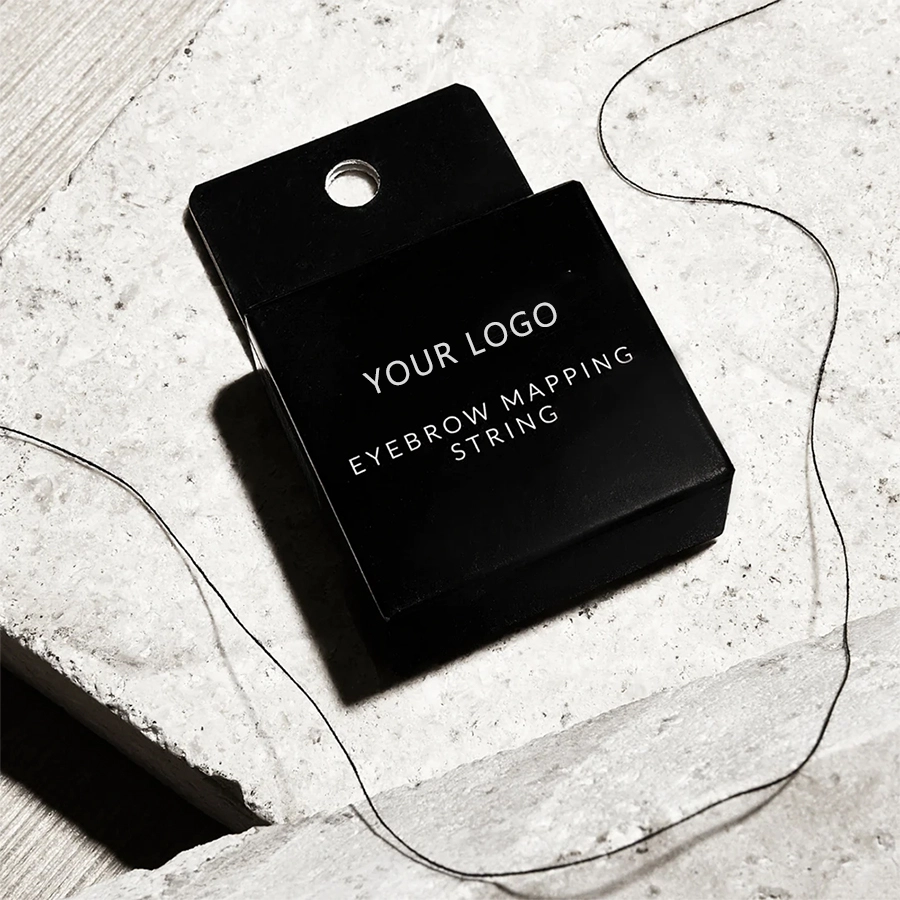
Microblading Pre-inked Mapping String Line 10m
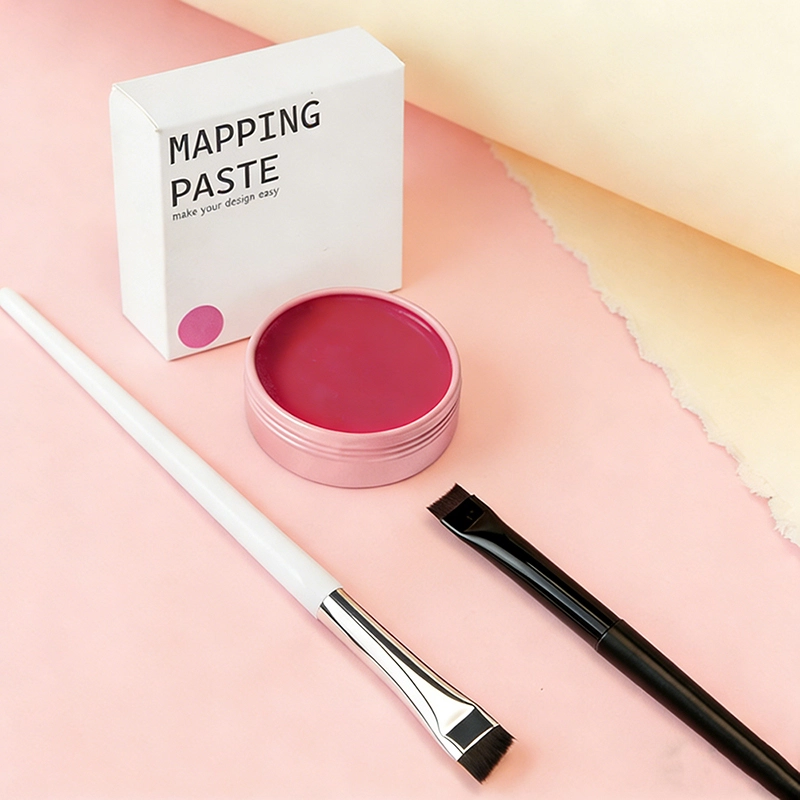
Pre-inked Mapping Ultra-Fine Eyebrows Eyeliner Blade Fan Brush

Instagram
Facebook
YouTube