


Wholesale eye lash lift kits: Supplier Checklist
- Why quality and compliance matter for lash lift kits
- Client safety and legal risk
- Consistency, client satisfaction and business reputation
- Supply chain stability and scalability
- Supplier checklist: product, safety and technical verification
- Core product components to verify
- Ingredient safety and labeling
- Patch testing and contraindications
- Quality systems, certifications and testing
- Manufacturing standards and GMP
- Certificates, independent testing and microbiology reports
- Regulatory registrations and local compliance support
- Commercial terms, packaging and branding
- Minimum order quantities (MOQ), pricing and lead times
- Private labeling, OEM and custom formulations
- Packaging, instructions and multilingual support
- Operational checks: logistics, support and training
- Sample policy and pilot runs
- Training, technical support and marketing materials
- After-sales support, warranty and returns
- Practical supplier verification table
- Commercial and competitive considerations — supplier selection strategy
- Price vs. value: hidden costs
- Local warehousing and logistics
- Brand alignment and differentiation
- Why I recommend establishing deeper supplier partnerships
- Long-term growth requires collaboration
- Audits, visits and third-party QC
- QM Makeup: supplier profile and how we can help
- FAQ — common questions from wholesalers and salon owners
- 1. What should be included in a professional eye lash lift kit?
- 2. How do I verify a supplier's safety claims?
- 3. Are lash lift chemicals regulated?
- 4. What minimum order quantities (MOQ) are typical?
- 5. How long should a lash lift kit remain effective (shelf life)?
- 6. Can I private label lash lift kits for my salon brand?
- 7. What training should be provided with wholesale kits?
I have worked in the semi-permanent makeup and lash beauty industry for over a decade, advising salons, distributors and e-commerce retailers on product selection, compliance and commercial strategy. When buyers search for wholesale eye lash lift kits, they are usually asking two core questions: Is the product safe and consistent for professional use? and Can this supplier support my business growth (pricing, MOQ, branding, logistics)? This article is a comprehensive supplier checklist that answers both — from ingredients and certifications to packaging, training and private labeling — with practical verification steps so you can confidently choose a supplier, whether you operate in the US, EU, Australia, or Asia.
Why quality and compliance matter for lash lift kits
Client safety and legal risk
Lash lift procedures involve direct contact with the eye area and chemicals that alter lash shape. Poor-quality formulations, contaminated solutions or unclear labeling can cause allergic reactions, conjunctivitis, chemical burns and legal claims. In many jurisdictions cosmetics and salon tools are regulated: for example, the U.S. Food and Drug Administration provides guidance on cosmetics safety and labeling (FDA Cosmetics), and the European Commission enforces rules under the EU Cosmetics Regulation. Verifying compliance reduces clinical and legal risk for both kit sellers and technicians.
Consistency, client satisfaction and business reputation
Reliable performance (consistent lift, minimal irritation, extended hold) drives repeat bookings and positive reviews. Kits from reputable suppliers tend to have standardized perming and neutralizing formulas, stable pH ranges, and clear instructions — all critical for predictable results across clients with different lash types and sensitivities.
Supply chain stability and scalability
For wholesale buyers, a supplier must be able to scale production, meet lead times, and support private labeling. I always evaluate production capacity, quality control processes, and logistics partners — these determine whether you can maintain inventory and expand into new markets without interruptions.
Supplier checklist: product, safety and technical verification
Core product components to verify
A professional eye lash lift kit typically contains: lifting (perm) lotion, setting (neutralizer) lotion, nourishing oil or keratin serum, silicone shields or rods in multiple sizes, adhesive, application tools (microbrushes, applicators), and clear professional instructions. Confirm exact contents and ingredient lists for each SKU. If the kit claims keratin or organic ingredients, ask for ingredient percentages and supporting documentation.
Ingredient safety and labeling
Request full ingredient lists (INCI names) and Safety Data Sheets (SDS). For chemicals used in perming solutions and neutralizers, check pH ranges and potential sensitizers such as thioglycolates or ammonium thioglycolate derivatives. The absence of comprehensive SDS or INCI details is a red flag. Refer to regulatory guidance: FDA cosmetics information (https://www.fda.gov/cosmetics) and EU Cosmetics Regulation resources (https://ec.europa.eu/growth/sectors/cosmetics_en).
Patch testing and contraindications
A professional kit must include clear patch test instructions and contraindication guidance (e.g., recent eye surgery, active eye infection, pregnancy cautions if applicable). I insist suppliers provide technician training materials that highlight patch test timelines and reaction management.
Quality systems, certifications and testing
Manufacturing standards and GMP
Ask whether the supplier manufactures under Good Manufacturing Practices. The international standard ISO 22716 describes Good Manufacturing Practices for cosmetics; possession of a compliant quality system or third-party audit reports is a strong signal of process control. You can reference ISO standards for best practices (ISO 22716).
Certificates, independent testing and microbiology reports
Request certificates and lab reports: microbiological testing (absence of pathogenic bacteria), stability testing (shelf life and performance under different temperatures), and heavy metal/contaminant screening if relevant. Independent lab tests backed by recognized labs add credibility. If a supplier cannot provide recent test reports, commission a random-batch test before placing a large order.
Regulatory registrations and local compliance support
Different markets have different registration requirements. In the EU, responsible persons must register cosmetic products in the Cosmetic Product Notification Portal (CPNP); in the UK, similar registration applies. Ask your supplier whether they support dossiers and regulatory documentation for your target market. If you’re selling into regulated channels (brick-and-mortar salons, online marketplaces), proof of compliance is often mandatory.
Commercial terms, packaging and branding
Minimum order quantities (MOQ), pricing and lead times
Negotiate realistic MOQs and pricing aligned to your market. Low-priced kits may hide higher failure rates. Evaluate total landed cost (unit price, shipping, duties, inspection fees) rather than unit price alone. Verify lead times during peak seasons and confirm contingency plans for delays.
Private labeling, OEM and custom formulations
If brand differentiation matters, ensure the supplier offers private labeling or OEM services. Verify artwork templates, lead times for labeled products, and quality of printed packaging. Request samples of previous private-label projects and ask for references from other clients.
Packaging, instructions and multilingual support
Professional kits should include clear instructions and pictograms. For international sales, request multi-language inserts (English, Spanish, French, German, etc.) and correct ingredient listings (INCI). Child-safe packaging, tamper-evident seals and lot/batch codes are essential for traceability.
Operational checks: logistics, support and training
Sample policy and pilot runs
Always order samples and run an internal pilot program before large purchases. Use multiple lash types and skin sensitivities during testing and document results. If possible, test under your typical salon conditions (temperature, humidity, technician skill levels).
Training, technical support and marketing materials
Good suppliers provide technician training (video, PDF, live webinars) and marketing assets (images, social media banners, instruction videos). Technical support must be responsive — ideally with a dedicated account manager for wholesale customers.
After-sales support, warranty and returns
Clarify the returns policy for defective or expired goods, warranty for equipment (e.g., heating elements for tools or lamps if included), and replacement procedures for damaged shipments. Confirm who bears freight costs for returns and how defective batches are handled.
Practical supplier verification table
| Checklist Item | Why it matters | How to verify | Suggested Evidence |
|---|---|---|---|
| Full INCI & SDS | Safety, allergy profiling | Request documents for each SKU | INCI list, Safety Data Sheet (PDF) |
| Microbiological & stability tests | Prevents contamination, ensures shelf life | Ask for recent lab reports | Third‑party lab certificates (PDF) |
| Manufacturing GMP/ISO | Consistent quality control | Request audit reports or certification | ISO 22716 compliance or audit report |
| Packaging & labeling | Legal compliance & user safety | Review sample packaging and multilingual inserts | Physical sample, artwork proofs |
| Private labeling & MOQ | Branding and commercial scalability | Confirm MOQ, pricing tiers, lead times | Commercial proposal, sample private‑label pack |
| Training materials | Reduces technician errors | Request demo videos and lesson plans | Training videos, slide decks, webinar schedules |
| Regulatory support | Market access & legal compliance | Check if supplier supplies regulatory dossiers | CPNP or local registration documentation |
Data sources and regulatory guidance referenced: FDA cosmetics information (https://www.fda.gov/cosmetics), EU Cosmetics sector guidance (https://ec.europa.eu/growth/sectors/cosmetics_en), ISO 22716 summary (https://www.iso.org/standard/36437.), and general infection control recommendations for body art from the U.S. Centers for Disease Control and Prevention (CDC Body Art). For background on semi-permanent makeup and related procedures see the industry overview (Semi-permanent makeup - Wikipedia).
Commercial and competitive considerations — supplier selection strategy
Price vs. value: hidden costs
Low unit cost can be appealing, but factor in failure rates, reorders, customer complaints, and returns. I calculate a true cost per successful service: (unit cost + shipping + waste + training amortization + returns) / expected successful services per kit. This metric often reveals the real winner when comparing suppliers.
Local warehousing and logistics
Decreasing lead times and faster replenishment improves cash flow and customer service. If you sell in multiple regions, prioritize suppliers with regional warehouses or reliable 3PL partnerships. Confirm HS codes, customs clearance history, and estimated landed times for your markets.
Brand alignment and differentiation
Consider whether the supplier supports product differentiation: unique formulas, eco-friendly packaging, vegan/halal certifications, and custom kits for lash lift + tint combinations. These differentiators can increase margins and customer loyalty.
Why I recommend establishing deeper supplier partnerships
Long-term growth requires collaboration
Long-term relationships enable product improvements, exclusive SKUs, and prioritized production. I advise negotiating staged commitments (pilot -> seasonal order -> annual contract) so both parties can validate demand and quality.
Audits, visits and third-party QC
When volumes justify it, conduct on-site supplier audits or hire third-party quality inspectors for pre-shipment checks. This is standard practice for international wholesale and reduces on-arrival issues.
QM Makeup: supplier profile and how we can help
As a practical example of a partner that meets the criteria above, QM Makeup was established in 2005; we specialized in the field of semi-permanent makeup and eyelash tattoo beauty, and we are committed to becoming a leading company in the industry. We specialize in permanent makeup and eyelash beauty products, providing professional wireless tattoo machines, microblading machines, semi-permanent makeup ink, tattoo skin for practice, tattoo numb cream, a professional lash lift kit, the best lash lift and tint kit, professional eyelash glue and eyelash extension lashes products.
Our company integrates distribution, wholesale, private labeling and OEM processing on a large scale. We provide customers with a full range of customized branding solutions to help our partners maximize business value. Our production base covers an area of 10,000 square meters and has independent research and development and production capabilities, helping customers achieve product customization and providing one-stop tattoo supplies brand solutions.
Why choose QM Makeup as a supplier?
- Experience: operating since 2005 with a proven track record in semi-permanent makeup and lash beauty.
- Comprehensive product range: tattoo machine, tattoo ink, microblading, tattoo supplies and false eyelashes, as well as professional lash lift kits and adhesives.
- Manufacturing & R&D: in-house development and production capacity across a 10,000 m2 facility for faster customization and quality control.
- Private labeling and OEM: full-service support from artwork to finished labeled products and packaging.
- Quality focus: sample programs, stability testing and support for regulatory documentation to help you enter target markets.
Visit our website at https://www.qmmakeup.com or contact us via email at [email protected] for catalogues, MOQ details and bespoke solutions. I have worked directly with QM Makeup on product validation, and their integrated capabilities make them a competitive option if you are sourcing professional lash lift kits at scale.
FAQ — common questions from wholesalers and salon owners
1. What should be included in a professional eye lash lift kit?
A complete kit should include a lifting (perm) lotion, setting (neutralizer) lotion, nourishing/conditioning oil or keratin serum, multiple sizes of silicone shields/rods, a gentle adhesive designed for lash lifts, applicators (microbrushes or silicone applicators), protective eyewash guidance, and clear instructions including patch test procedures. Packaging should include lot numbers and expiry dates.
2. How do I verify a supplier's safety claims?
Request INCI ingredient lists, Safety Data Sheets (SDS), recent microbiological and stability testing reports, GMP/ISO audit certificates, and evidence of regulatory registrations for your target market. If these are not provided, commission an independent test on a sample batch before a significant purchase.
3. Are lash lift chemicals regulated?
Yes, they fall under cosmetics regulations in many jurisdictions. Regulatory bodies like the U.S. FDA provide cosmetic guidance (FDA Cosmetics) and the EU manages cosmetic safety through EU regulations. Suppliers should be able to provide documentation supportive of market entry, and you should follow local rules for labeling, claims and product safety.
4. What minimum order quantities (MOQ) are typical?
MOQs vary by supplier and customization level. Off-the-shelf kits may have low MOQs (a few dozen to a few hundred), while private labeled or custom-formulated kits often require higher MOQs. Always ask for tiered pricing and sample pilots to validate demand before committing to large MOQ runs.
5. How long should a lash lift kit remain effective (shelf life)?
Shelf life depends on formulation and packaging. Most professionally manufactured kits have a 12–36 month unopened shelf life if stored per the supplier recommendations. Stability testing documents from the supplier will provide exact shelf-life data.
6. Can I private label lash lift kits for my salon brand?
Yes — many manufacturers offer private labeling and OEM services. Confirm design proofs, regulatory support, MOQ for private label runs, lead times, and whether the supplier can support multilingual inserts for your markets.
7. What training should be provided with wholesale kits?
A supplier should provide technician training materials covering patch testing, application timing for different lash types, aftercare instructions, contraindications, and reaction management. Video demos and live webinars are especially useful for minimizing technician errors.
If you want one-on-one supplier recommendations, product samples, or a customized checklist tailored to your region and sales model, reach out to us. For product catalogs, private-label inquiries or to request samples, visit https://www.qmmakeup.com or email [email protected]. I’m available to advise on product selection, QC steps and pilot testing protocols to make your lash lift wholesale sourcing successful.
Top tattoo anti-scar serum Manufacturers and Suppliers
What is lash lift kit
Best eye lash lift kit manufacturers and supplier brands in 2026
QM Makeup Best professional microblading needle manufacturers and supplier brands
Lash lift kit
What is the MOQ for customization?
For logo customization, the MOQ is 2000 kits; for other in-depth customization, the MOQ will be based on your specific requirements.
Powder Pigment
What is the difference between inorganic and organic permanent makeup ink?
The main difference between organic and inorganic pigments lies in their chemical composition, properties and performance. Here are some key points to distinguish them:
Chemical composition:
Organic tattoo pigment are composed of carbon-based compounds, usually containing carbon, hydrogen, oxygen and other elements (such as nitrogen, sulfur, etc.). Their molecular structure is complex and usually has organic chemical characteristics.
Inorganic tattoo pigments are mainly composed of inorganic compounds and usually do not contain carbon. Such pigments may contain metal oxides, salts, minerals, etc.
Color saturation:
Organic permanent makeup pigment usually have higher color saturation and brighter colors. Inorganic permanent makeup pigment are generally more stable in color, have strong hiding power, and have low color saturation.
Stability:
Organic cosmetic tattoo pigment have poor stability in light, heat and chemical environments and may fade. Inorganic pigments are generally more stable and resistant to high temperatures and chemical erosion.
Permeability:
Organic pigments are usually composed of organic compounds, which often have good water solubility and can dissolve in water faster. Therefore, organic pigments have stronger permeability than inorganic pigments.
In general, organic and inorganic pigments have their own advantages and disadvantages and are suitable for different application scenarios and needs. In order to take into account the brightness, saturation and stability of the ink, most tattoo supplies ink currently use a mixed formula of organic and inorganic.
Products
Compare to liquid glue, what is the advantage of glue balm?
Compared with liquid glue, solid glue belongs to non liquid formula glue, with lower fluidity and better control of usage, effectively avoiding the use of too much glue during the operation. At the same time, the solid glue will not leave a thick sticky layer, which is more convenient for you to adjust the position of eyelashes and eyebrows.
Micro Blade
What size needle for microblading eyebrows? U-curved needle or a slope needle?
Slope Needle: The tip of a tilting needle usually presents a beveled angle. This shape is suitable for detailed line and contour work and is commonly used for contour and fine areas of tattoos, but may require some skill to ensure smoothness and consistency of the line.
U-curved Needle: U-curved needles have a U-curved tip and usually consist of multiple needles. The U-curved needle design distributes ink more evenly across the skin. It is more suitable for color filling and shading effects and gradient effects on large areas, and can cover a larger area in a short period of time. However, you need to control the pressure and speed to avoid uneven color.
To summarize, the choice of needle depends mainly on the design of the eyebrows semi permanent makeup and the desired effect.
Pigment Ink
How long does the ink typically last in the skin ?
On average, our pigments last about 1-5 years without fading, depending on the clients individual differences and the depth of the tattoo operation.

Professional Pre Inked Eye Brow Mapping String 30m
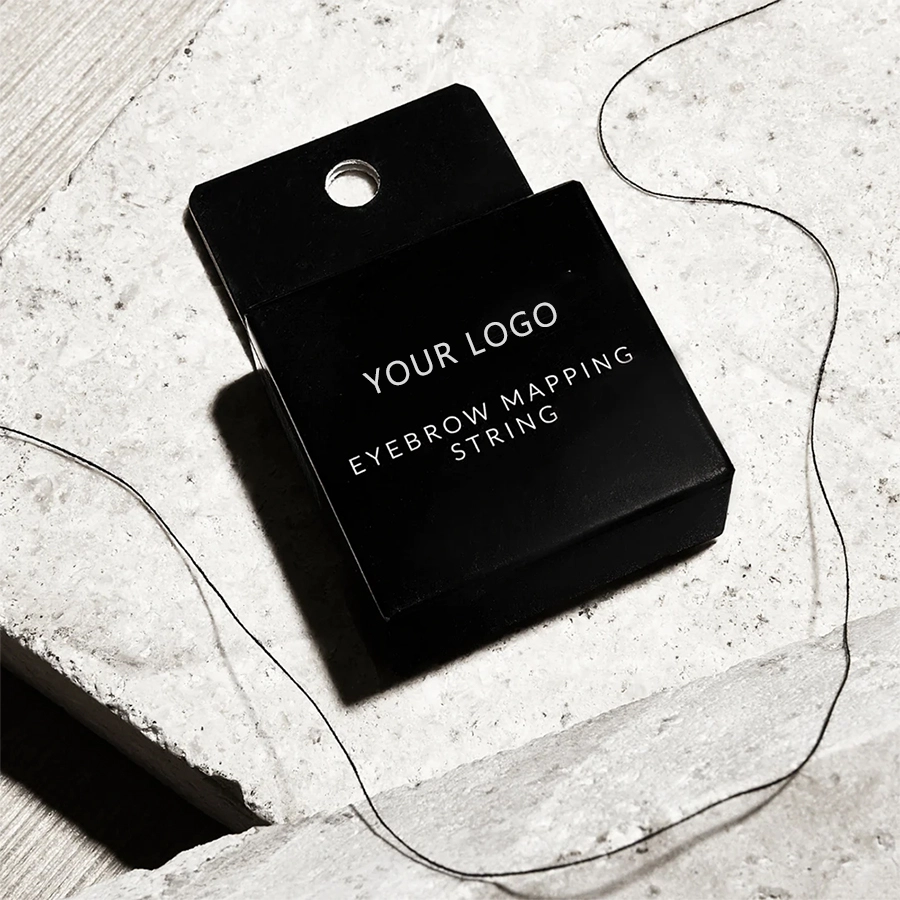
Microblading Pre-inked Mapping String Line 10m
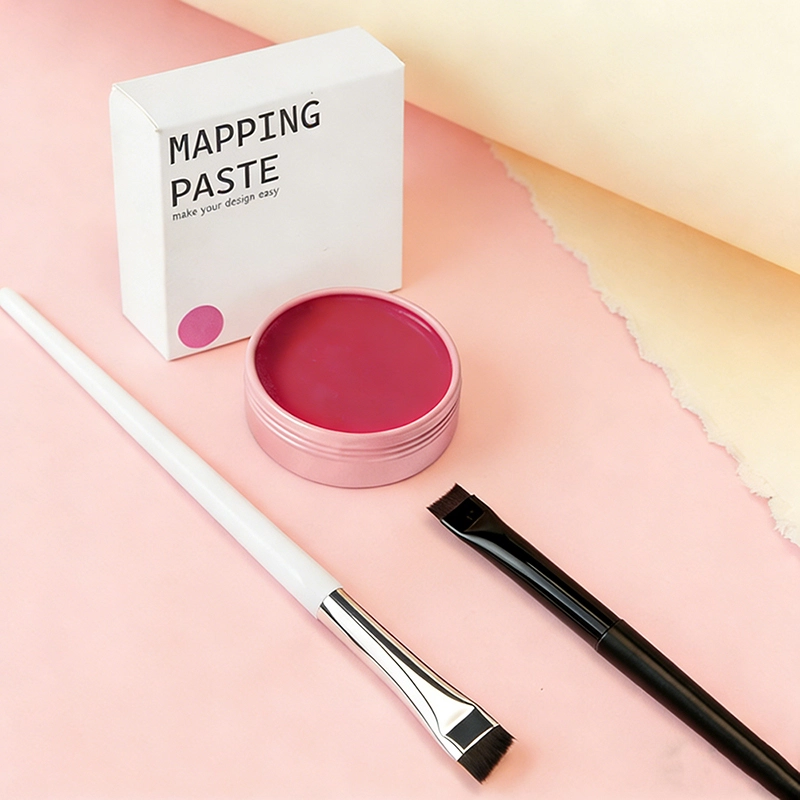
Pre-inked Mapping Ultra-Fine Eyebrows Eyeliner Blade Fan Brush

Instagram
Facebook
YouTube