


Packaging Ideas for Private Label eye lash lift kits
- Understanding market demand and user expectations
- Who buys eye lash lift kits and why
- and semantic needs
- Common pain points to address on-pack
- Packaging design principles for performance and brand trust
- Form meets function: protecting formulations and tools
- Information hierarchy and on-pack copy
- Visual branding and shelf impact
- Materials, sustainability, and cost optimization
- Choosing primary and secondary packaging
- Sustainability trade-offs (with data)
- Cost-saving strategies
- Regulatory labeling, safety, and logistics
- Regulatory essentials and claims
- Safety testing and documentation
- Packaging for shipping and retail logistics
- Private label and OEM packaging strategies (QM Makeup example)
- Why partner with a specialized OEM
- What a full-service provider should offer
- Sample private-label packaging concept (spec sheet)
- Implementation checklist and go-to-market tips
- Pre-launch checklist
- Marketing and post-purchase experience
- Measuring success
- FAQ
- 1. What should a complete eye lash lift kit include?
- 2. Which packaging materials best preserve lash lift solutions?
- 3. How can I make my lash lift kit stand out on retail shelves?
- 4. Are there regulatory requirements I must follow for labeling?
- 5. Can private label kits be customized for salon vs. retail consumers?
- 6. How do I ensure sustainability without compromising product stability?
- Contact and next steps
As a consultant with years of experience in semi-permanent makeup and eyelash beauty products, I understand that packaging for an eye lash lift kit is far more than an aesthetic wrapper—it's a performance-critical component that protects fragile reagents, conveys compliance, educates end-users, and supports brand positioning in a crowded market. In this article I combine market insights, material science, regulatory considerations, and practical design templates so you can build private label lash lift kits that sell, perform, and scale.
Understanding market demand and user expectations
Who buys eye lash lift kits and why
Private-label buyers are typically professional salons, freelance lash technicians, beauty retailers, and increasingly, tech-savvy at-home consumers. Professionals prioritize reliability, single-use safety, and clear instructions; retailers care about shelf impact and clear labeling; at-home users value safety, simplicity, and aftercare information. Designing packaging that addresses each group's priorities helps reduce returns and improves repurchase rates.
and semantic needs
When users search for eye lash lift kit they are looking for a product that includes a perming lotion (lifting solution), neutralizer, silicone shields/rods, bonding/adhesive, applicators, aftercare serum, and clear instructions. Incorporate these semantic keywords naturally across packaging copy and product inserts—terms such as lash lift solution, neutralizer, lash bonding gel, silicone rod sizes, and aftercare serum help with discoverability and set correct expectations.
Common pain points to address on-pack
Top friction points include unclear mixing ratios, insufficient aftercare guidance, short shelf life once opened, and accidental contact warnings. Address these directly on packaging: indicate expiration after opening (e.g., Use within X months after opening), provide a clear ingredient list and warnings, and include QR codes that link to step-by-step video tutorials to reduce user error and liability.
Packaging design principles for performance and brand trust
Form meets function: protecting formulations and tools
Eye lash lift kits contain oxidizing and reducing agents that are sensitive to light and air. Use opaque or amber containers for liquids (perm/neutralizer) to reduce photodegradation; choose tamper-evident caps and single-dose ampoules for professional kits to maintain sterility. For powders or gels, resealable pouches with foil lining or laminated barriers extend shelf life.
Information hierarchy and on-pack copy
Design panels with a clear hierarchy: product name and USP on the front, a concise contents list and intended audience (For professional use or Home-use friendly) on a side panel, and a step-by-step quick guide plus safety icons on the back. Keep regulatory-required information (ingredients, net weight/volume, batch/lot number, expiration, manufacturer) clearly visible. When relevant, reference certification standards such as ISO 22716:2007 Good Manufacturing Practices (GMP) for cosmetics to reassure professional buyers.
Visual branding and shelf impact
Visual differentiation helps your private label stand out: use color coding for different strength formulations (e.g., mild/standard/strong), tactile finishes (soft-touch coatings) for High Quality perception, and clear windows for kits that include visible tools. But avoid overcomplicating—too much decoration can obscure instructions. Minimalist, clinical aesthetics often work best for performance-driven lash lift kits, while High Quality lines can use metallic inks or embossing to signal luxury.
Materials, sustainability, and cost optimization
Choosing primary and secondary packaging
Primary packaging must be chemically compatible with lash lift reagents. Common options include:
- Amber glass ampoules: excellent barrier to oxygen and light; ideal for perm/neutralizer but heavier and higher cost.
- High-density polyethylene (HDPE) or polyethylene terephthalate (PET) bottles: lighter and impact-resistant; PET is more transparent but can be made opaque.
- Aluminum tubes or cartridges: good barrier and lightweight, often used for creams and gels.
Sustainability trade-offs (with data)
Choosing sustainable materials often involves trade-offs between barrier performance, cost, and recyclability. Below is a comparison table summarizing typical options:
| Material | Barrier/Compatibility | Recyclability | Typical Cost Impact |
|---|---|---|---|
| Amber glass ampoules | Excellent (high) | Widely recyclable (collection dependent) — see EPA recycling guidance | High |
| PET bottles | Good (medium) | Widely recyclable; light-weight | Medium |
| HDPE bottles | Good (medium) | Recyclable in many programs | Low–Medium |
| Foil-laminated sachets | Excellent (very high) | Difficult to recycle in many regions | Low |
| Aluminum tubes | Very good | Recyclable if collected | Medium–High |
Source references: recycling and materials guidance from the U.S. Environmental Protection Agency and GMP considerations under ISO 22716.
Cost-saving strategies
To control COGS while maintaining quality: standardize on a few bottle sizes across product lines to reduce tooling costs, negotiate bulk purchases of silicone shields and applicators, consider printed flexible inserts instead of thick manuals, and explore co-packers who can provide kitting services to reduce handling costs. Single-dose blister packs reduce waste from contamination but increase per-unit cost—balance this with target customer willingness to pay.
Regulatory labeling, safety, and logistics
Regulatory essentials and claims
Cosmetic and beauty products are regulated differently by jurisdiction. In the U.S., the FDA regulates cosmetics but does not pre-approve most cosmetics; proper labeling, truthful claims, and ingredient disclosure are required. For professional-use medical claims, different rules apply. Ensure labels avoid drug/medical claims unless you follow the relevant regulatory pathway. For EU markets, comply with the Cosmetics Regulation (EC) No 1223/2009 and register products on the Cosmetic Product Notification Portal (CPNP).
Safety testing and documentation
While lash lift kits are cosmetics, you should conduct preservative efficacy testing (if relevant), stability testing, and compatibility testing between formulations and packaging materials. Maintain a technical dossier with batch records, certificates of analysis (CoA), and safety data sheets (SDS) for transport. For professional buyers requesting GMP evidence, reference your manufacturing compliance (e.g., ISO 22716) to demonstrate quality systems.
Packaging for shipping and retail logistics
Design outer cartons to protect against crush and moisture during transit. Use internal dividers or foam inserts for glass ampoules. For international distribution, consider including multi-language inserts or QR codes to localized video guides. Also plan for palletization and master carton dimensions that optimize freight costs—many logistics providers price by volumetric weight.
Private label and OEM packaging strategies (QM Makeup example)
Why partner with a specialized OEM
When you scale a private label eye lash lift kit, partnering with an OEM that understands both formulation and packaging reduces time-to-market and quality risk. As an example, QM Makeup—established in 2005—specializes in semi-permanent makeup and eyelash tattoo beauty and provides integrated services from product development to large-scale OEM/private-label production. They’re positioned to handle formulation compatibility, packaging sourcing, and full-custom branding.
What a full-service provider should offer
A reliable partner should provide:
- Custom formulation and stability testing
- Packaging design and structural mockups
- Regulatory labeling guidance and batch traceability
- Flexible MOQ options for private labeling
- End-to-end kitting and global logistics
QM Makeup integrates distribution, wholesale, private labeling and OEM processing on a large scale, and their production base covers an area of 10,000 square meters with independent R&D and production capabilities. They provide professional lash lift kits, lash lift and tint kits, eyelash glue, and other tattoo and microblading supplies. More at qmmakeup.com or email [email protected].
Sample private-label packaging concept (spec sheet)
Below is a sample spec for a professional 6-client eye lash lift kit that you can adapt for private labeling:
| Component | Primary Packaging | Qty per Kit | Notes |
|---|---|---|---|
| Perming solution (lifting) | 10 ml amber glass ampoule | 6 | Single-use ampoules reduce contamination; label with batch and expiry |
| Neutralizer | 10 ml amber glass ampoule | 6 | Match to perming strength; include safety icons |
| Bonding glue | 5 g PET squeeze bottle | 1 | Airless dispensation reduces waste |
| Silicone shields (S/M/L) | Re-sealable pouch | 3 sets | Color-coded sizes |
| Applicators / micro brushes | Packed in sterile tray | 20 | Disposable |
| Aftercare serum | 3 ml aluminum tube | 6 | Post-service nourishing formula |
This spec can be customized by volume. QM Makeup supports MOQ flexibility and can provide tailored packaging, printing, and assembly to match brand requirements.
Implementation checklist and go-to-market tips
Pre-launch checklist
Before launch, confirm: stability and compatibility testing complete; SDS and CoA available; labeling compliant with target markets; packaging prototypes approved; kitting and logistics partners confirmed; and marketing assets (images, tutorials) ready.
Marketing and post-purchase experience
Drive conversions with unboxing-friendly packaging (easy reveal, clear inserts), include QR-linked tutorial videos to reduce misuse, and offer refill or professional-size options for repeat buyers. Collect performance feedback and monitor returns to iterate packaging versions—data-driven adjustments reduce long-term costs.
Measuring success
Key metrics: first-time defect/return rate, time-to-application errors (measured via reviews/feedback), repeat purchase rate, and average order value. Use these to prioritize packaging changes—improvements that reduce technician errors or increase perceived value typically deliver the highest ROI.
FAQ
1. What should a complete eye lash lift kit include?
A professional kit typically includes lifting solution (perm), neutralizer, adhesive/bonding gel, silicone shields or rods in multiple sizes, applicators (micro-brushes), aftercare serum, disposable tools (swabs, tape), and clear instructions. Single-dose ampoules are recommended for sterility and consistent dosing.
2. Which packaging materials best preserve lash lift solutions?
Amber glass ampoules provide the best protection against light and oxygen for oxidizing agents. High-quality PET or HDPE bottles work for many formulations if combined with tamper-evident caps and foil liners. Conduct compatibility and stability testing for your chosen material and formulation.
3. How can I make my lash lift kit stand out on retail shelves?
Use a clear value proposition on the front panel, color-coded formulations, tactile finishes, and include a visible kit breakdown. Offering a QR code linking to a professional tutorial and before/after photos also increases conversion at point-of-sale.
4. Are there regulatory requirements I must follow for labeling?
Yes—label requirements vary by market. In the U.S., follow FDA cosmetic labeling guidance. In the EU, you must comply with the Cosmetics Regulation and CPNP registration. Avoid medical claims unless you pursue the relevant regulatory approvals.
5. Can private label kits be customized for salon vs. retail consumers?
Absolutely. Salon/professional kits should emphasize bulk sizes, sterility (single-dose ampoules), and technical instructions. Retail/home kits should focus on safety, simplified instructions, and smaller quantities to reduce risk and waste.
6. How do I ensure sustainability without compromising product stability?
Balance is key: use recyclable outer cartons and PCR (post-consumer recycled) cardboard, standardize bottle sizes to reduce excess material, and choose primary containers with proven barrier properties. If foil-laminated sachets are necessary for barrier reasons, indicate responsible disposal and offer refill programs where feasible.
Contact and next steps
If you're ready to design a private-label eye lash lift kit, I recommend starting with a packaging prototype and stability assessment. QM Makeup can help from formulation to finished product: established in 2005, they specialize in semi-permanent makeup and eyelash tattoo beauty, offering tattoo machines, tattoo ink, microblading supplies, practice skin, tattoo numb cream, professional lash lift kits, lash lift and tint kits, eyelash glue, and false eyelashes. They integrate distribution, wholesale, private labeling and OEM processing at scale and offer end-to-end branding solutions from their 10,000 m2 production base. Visit qmmakeup.com or email [email protected] to request a quote or ask about MOQ, custom packaging options, and technical support.
The B2B Buyer’s Guide to Lash Lift Solutions
The B2B Buyer’s Guide to Permanent Makeup Supplies
How Does a Microblading Eyebrow Pen Work? Step-by-Step
How to Read Eyelash Lift Kit Labels and Ingredients
Tattoo aftercare
Is the repair product suitable for all skin types?
Yes, our repair products are good tattoo aftercare products, it is suitable for all skin types aftercare for tattoo. They are gentle and safe and can be used on sensitive skin.
Micro Blade
Do I need to use more than one blade during the procedure?
Our blades are made of 304 stainless steel, sharp and tough, usually one blade can support the completion of the entire microblading process. However, due to the different conditions of the customer's eyebrows, the operator may choose different sizes of blades for treatment accordingly, at this time, it may be necessary to use more than one blade in the microblading professional eyebrow microblading process.
Eyelash Perming Glue Balm
What’s your product quality certificate?
We have MSDS certificate for PERM & FIXING & Glue lotions.
Lash Glue
How do I choose the right lifting glue for eyelashes?
The choice of glue for eyelash lifting depends on several factors, including skin type, application habits and personal skills. Here are some tips for you:
Skin type: For sensitive skin, we recommend choosing strong sticky glue.
Habits: If you don't want the glue to leave a waxy residue when applied, we recommend choosing strong sticky glue; if you need a very sticky glue and don't mind a slightly elastic status quo during application, we recommend choosing super sticky glue.
Personal skills: If you are a professional, we recommend using liquid lifting glue, strong sticky glue and super sticky glue are ideal for you. If you are a beginner, we recommend lifting glue balm, non-flowing glue allows you to better control the amount of glue and adjust the lashes, you can click to see the lifting glue balm page for more details.
Customized service
Are there any additional charges for customized services?
Customized services may be subject to appropriate customization fees based on your specific requirements, which can be negotiated with our sales team.

Professional Pre Inked Eye Brow Mapping String 30m
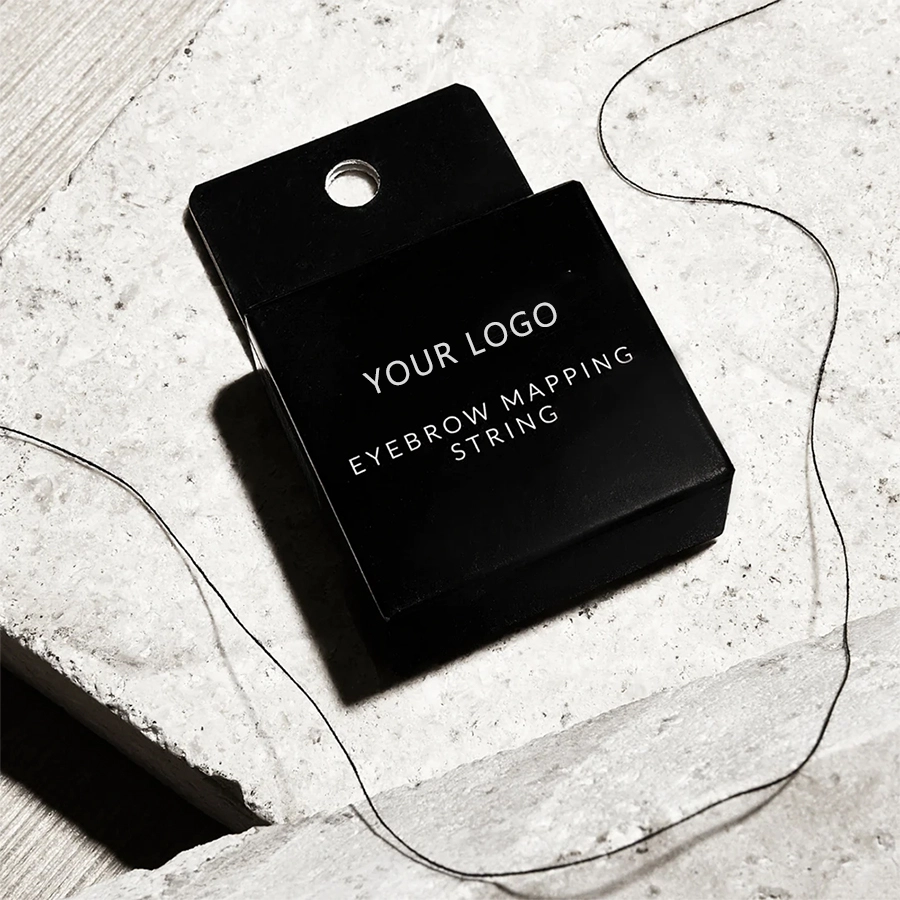
Microblading Pre-inked Mapping String Line 10m
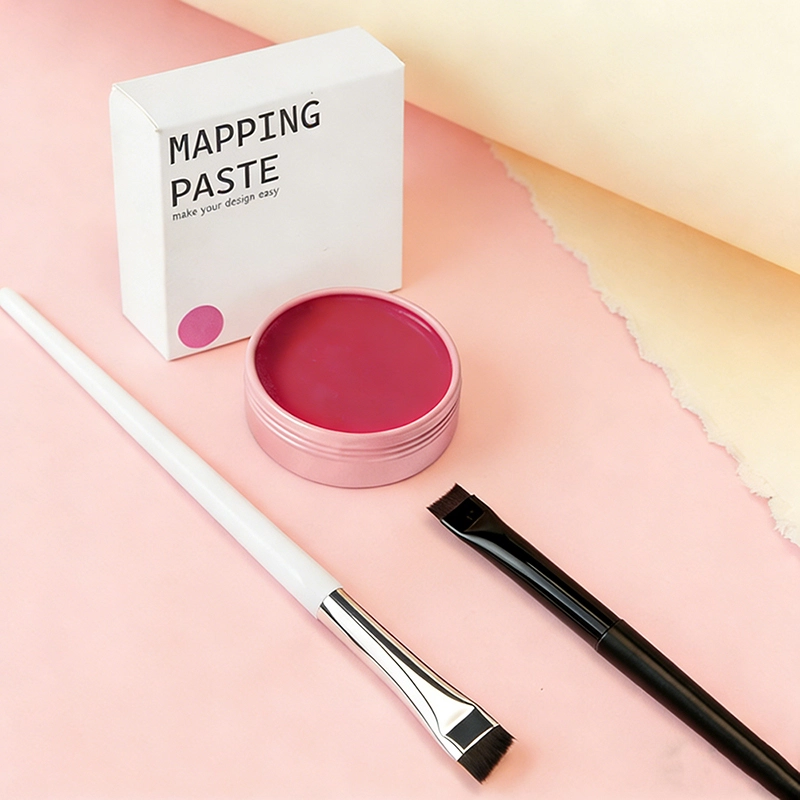
Pre-inked Mapping Ultra-Fine Eyebrows Eyeliner Blade Fan Brush

Instagram
Facebook
YouTube