


How to Market Lash Lift Services Using Kits
- Understanding customer intent and where kits fit
- Why clients buy a lash lift service vs. a kit
- Search signals and local demand ( considerations)
- Customer pain points you must address
- Building a product-led marketing strategy
- Positioning the eye lash lift kit in your funnel
- Content types that convert for kits
- Pricing, bundles, and retail margins
- Operational best practices, safety and compliance
- Regulatory framework and credible references
- Labeling, SDS, and patch-testing content
- Training and certification as a risk-mitigation tool
- Using kits to scale sales: channels, partnerships and differentiation
- Retail channels: in-salon, e-commerce, marketplaces
- Training academies and B2B wholesale strategies
- Differentiation: what makes your kit stand out
- Comparison table: DIY vs Professional vs Lash lift & tint kits
- Practical marketing tactics and campaign examples
- Local promotions and service + product bundling
- Content calendar and influencer seeding
- KPIs to measure success
- QM Makeup: production capability and professional supply solutions
- Conclusion and recommended next steps
- FAQ
- 1. Can an eye lash lift kit be sold directly to consumers?
- 2. What does a professional lash lift kit typically include?
- 3. How do I price a lash lift kit for salons?
- 4. What safety measures should be included in marketing materials?
- 5. How can I use a lash lift and tint kit to increase average order value?
- 6. Do you offer OEM/private labeling for lash lift kits?
I help salons, beauty educators, and distributors worldwide grow eyelash service revenue by turning professional tools—like an eye lash lift kit—into strong selling propositions that drive bookings, retail sales, and course enrollments. This article explains how to market lash lift services using kits, link product benefits to customer intent, ensure regulatory compliance, and scale through training, retail, and B2B partnerships.
Understanding customer intent and where kits fit
Why clients buy a lash lift service vs. a kit
When someone searches for an eye lash lift kit or lash lift kit, their intent can range from DIY experimentation to professional purchasing. I separate these into three primary user intents: end-consumer DIY, licensed technician seeking professional kits, and salon owners/educators buying bulk or private-label products. Identifying the intent determines your positioning: safety-first education for DIYers, performance and warranty for pros, and margin/branding opportunities for businesses.
Search signals and local demand ( considerations)
Local search behavior matters: queries like lash lift near me often convert to bookings, while best lash lift and tint kit signals a product purchase intent. To capture both, I recommend combining localized service pages with product landing pages that include schema and location-specific content. Structured data and clear NAP (Name, Address, Phone) help systems associate your product offers with nearby services.
Customer pain points you must address
Across intents, the common pain points are: safety (eye sensitivity), predictable results, duration, and cost. For professionals, speed and kit consistency matter. Each marketing message must explicitly resolve at least one pain point—e.g., professional lash lift kit with hypoallergenic solutions and training videos—and link to verifiable quality statements or certifications.
Building a product-led marketing strategy
Positioning the eye lash lift kit in your funnel
I structure funnels that use kits both as revenue sources and as lead magnets. Example funnel stages:
- Awareness: blog posts and videos comparing lash lift vs lash extensions and demonstrating before/after ( for lash lift kit and lash lift and tint kit).
- Consideration: free mini-courses or checklist in exchange for email that shows safe application steps and product specs.
- Conversion: upsell to a professional lash lift kit with training, plus booking page for in-salon service.
Content types that convert for kits
The most persuasive content I use includes: technician-led tutorials, short vertical videos showing application and results, comparison tables, customer testimonials with timestamps, and downloadable safety data sheets (SDS). Showing the kit components (silicone shields, bonding agent, lifting lotion, neutralizer, nourishing oil, and clear step cards) reduces friction and answers pre-sale questions.
Pricing, bundles, and retail margins
Offer tiered SKUs to address different buyers: a consumer DIY lash lift kit, a professional lash lift kit with larger volumes and stronger solutions, and a lash lift and tint kit that combines lifting and tinting for higher average order value. Consider including training access or certification to justify a High Quality price for professional kits.
Operational best practices, safety and compliance
Regulatory framework and credible references
Safety sells. I always cite authoritative sources when describing product safety and regulatory compliance. For example, the U.S. Food and Drug Administration provides guidance on eye cosmetics and adhesives: FDA on Eye Cosmetics. For manufacturing and quality practice, ISO 22716 (cosmetic GMP) is a relevant industry standard: ISO 22716. For general background on lashes and eyelash procedures, reference summaries like the Wikipedia page for Eyelash: Eyelash - Wikipedia.
Labeling, SDS, and patch-testing content
Every kit marketed to consumers or professionals should include clear ingredient lists, SDS, and instructions for patch testing. In my practice I provide downloadable PDF SDS files linked on product pages, and a required short tutorial that walks technicians through a patch/skin test. This reduces liability and increases buyer confidence—both critical for online conversions.
Training and certification as a risk-mitigation tool
Provide step-by-step training videos and a certificate upon completion. This not only improves safety outcomes but raises perceived value. Many buyers will pay a High Quality for a professional lash lift kit + certified training bundle because it reduces their operational risk and helps with local compliance.
Using kits to scale sales: channels, partnerships and differentiation
Retail channels: in-salon, e-commerce, marketplaces
When I launch a lash lift product line, I simultaneously enable three channels: salon retail (for immediate upsell), direct-to-consumer e-commerce (for broader reach), and selective marketplaces for exposure. Use unique SKUs for each channel to manage pricing and promotions. For local customers, emphasize book a lash lift service CTAs next to product listings to capture immediate service revenue.
Training academies and B2B wholesale strategies
Partner with training academies to use your professional lash lift kit as the mandated kit for courses. Offer wholesale pricing for bulk orders and private-label/OEM options for established salon chains. I negotiate minimum order quantities and offer starter-kit discounts to incentivize adoption.
Differentiation: what makes your kit stand out
Differentiate on three axes: ingredient safety (hypoallergenic formulas), packaging that reduces contamination (single-use applicators/sachets), and support (training + replenishment subscriptions). Semantic features like professional lash lift kit and best lash lift and tint kit should be used where true. Avoid hyperbole; instead, back claims with tangible proof—lab tests, ISO/GMP adherence, or clinician endorsements.
Comparison table: DIY vs Professional vs Lash lift & tint kits
| Kit Type | Target User | Typical Contents | Pros | Cons | Regulatory Notes |
|---|---|---|---|---|---|
| DIY consumer eye lash lift kit | At-home users | Small sachets, silicone shields, simple instructions, tint option (opt) | Low price, easy retail | Higher risk of misuse, lower results consistency | Must include SDS & patch test info; follow local cosmetic rules (FDA) |
| Professional lash lift kit | Licensed technicians, salons | Larger volumes, professional-grade lifting/neutralizing solutions, shields, adhesive, aftercare oil, training access | Consistent results, higher margins, training bundle | Higher cost, requires training/certification | Recommended GMP/ISO practices for manufacturers (ISO 22716) |
| Lash lift and tint kit | Salons & pros wanting combined service | Lifting solutions + professional tint, developer, shields | Higher AOV, full-service appeal | Requires precise application and timing | Tint ingredients may have additional colorant regulations; include full labeling |
Practical marketing tactics and campaign examples
Local promotions and service + product bundling
Promote a Lift + Home Kit aftercare bundle to clients who receive an in-salon lift—this creates a post-service revenue stream. For example: book a lift for $X and get a 20% discount on a take-home lash lift and tint kit. This drives retail sales while reinforcing safe aftercare practices.
Content calendar and influencer seeding
Plan a 90-day content calendar that includes: 4 short tutorials, 2 technician Q&A livestreams, client testimonials, and 3 before/after galleries. Seed 5 micro-influencers (local beauty pros) with a professional lash lift kit and require an honest review. Track bookings and kit codes using UTM parameters to measure ROI.
KPIs to measure success
Key metrics I track: conversion rate for product landing pages, appointment booking lift after product purchases, average order value (AOV), training enrollment rates, and return/complaint rates. For safety and compliance, monitor patch test fail rates and incident reports and adjust training content accordingly.
QM Makeup: production capability and professional supply solutions
QM Makeup was established in 2005; we specialized in the field of semi-permanent makeup and eyelash tattoo beauty, and we are committed to becoming a leading company in the industry. We specialize in permanent makeup and eyelash beauty products, providing professional wireless tattoo machines, microblading machines, semi-permanent makeup ink, tattoo skin for practice, tattoo numb cream, a professional lash lift kit, the best lash lift and tint kit, professional eyelash glue and eyelash extension lashes products.
Our company integrates the distribution, wholesale, private labeling and OEM processing on a large scale. We provide customers with a full range of customized branding solutions to help our partners maximize business value. Our production base covers an area of 10,000 square meters and has independent research and development and production capabilities, helping customers achieve product customization and providing one-stop tattoo supplies brand solutions. Visit QM Makeup or contact us at [email protected] to explore private labeling, bulk pricing, and certified training bundles.
QM Makeup advantages and main products include tattoo machine, tattoo ink, microblading, tattoo supplies, eyelashes false. Our technical strengths include decades of product R&D, ISO-aligned manufacturing practices, and the ability to offer OEM/ODM solutions that help salons and distributors grow their private-label offerings.
Conclusion and recommended next steps
Marketing lash lift services using kits is about aligning product design with buyer intent, demonstrating safety and training, and creating channels that convert product interest into bookings and repeat sales. Start small with a professional lash lift kit offering, bundle training, and use local SEO plus targeted content to capture both product and service demand. Track KPIs closely and iterate based on technician feedback and incident reporting.
FAQ
1. Can an eye lash lift kit be sold directly to consumers?
Yes, but with precautions. Consumer kits should include clear instructions, patch test guidance, and safety information. Some jurisdictions may restrict certain chemical strengths to licensed professionals—check local regulations and provide SDS and ingredient transparency. For regulatory guidance see the FDA page on eye cosmetics.
2. What does a professional lash lift kit typically include?
A professional kit usually includes a lifting lotion, neutralizer, silicone pads/shields in multiple sizes, eyelash adhesive, nourishing oil/serum, microbrushes, and detailed laminated instructions. Many kits also include access to training videos or certification resources.
3. How do I price a lash lift kit for salons?
Factor in cost of goods, training/support, and perceived value. I recommend wholesale pricing that allows salons a 30–50% markup for retail sales and a higher service margin when bundled with training. Consider tiered pricing for starter kits and refill packs.
4. What safety measures should be included in marketing materials?
Always include patch test instructions, contraindications (e.g., active eye infections), ingredient lists, SDS links, and aftercare guidance. Training content should highlight timing, isolation techniques, and emergency protocols for adhesive reactions.
5. How can I use a lash lift and tint kit to increase average order value?
Promote the combined service as a time-saving, long-lasting solution: customers get both curl and color in one appointment. Bundle the salon service with a take-home maintenance kit or an at-home tinted serum to increase AOV.
6. Do you offer OEM/private labeling for lash lift kits?
Yes—QM Makeup provides private labeling and OEM services with flexible MOQ and full branding support. Contact us at [email protected] or visit qmmakeup.com for details and sample requests.
Ready to scale your lash lift offerings? Contact QM Makeup for professional lash lift kits, bulk pricing, private label solutions, and certified training packages: https://www.qmmakeup.com • Email: [email protected]
Client Aftercare Instructions Template for PMU Artists
QM Makeup Best professional eyebrow tattoo pen manufacturers and supplier brands
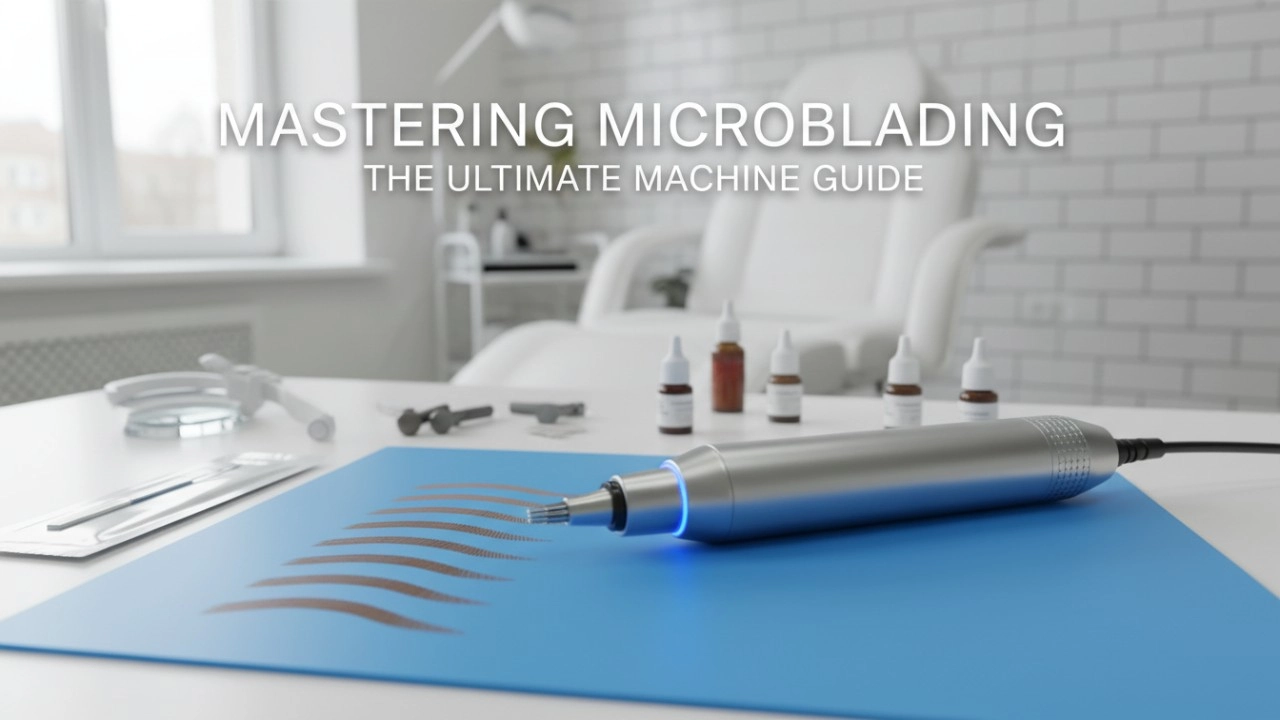
The Ultimate Microblading Machine Guide for 2026: Tech, Tiers, and Precision Artistry
eye lash lift kit Buyer’s Guide: Ingredients & Safety
Powder Pigment
What is the difference between inorganic and organic permanent makeup ink?
The main difference between organic and inorganic pigments lies in their chemical composition, properties and performance. Here are some key points to distinguish them:
Chemical composition:
Organic tattoo pigment are composed of carbon-based compounds, usually containing carbon, hydrogen, oxygen and other elements (such as nitrogen, sulfur, etc.). Their molecular structure is complex and usually has organic chemical characteristics.
Inorganic tattoo pigments are mainly composed of inorganic compounds and usually do not contain carbon. Such pigments may contain metal oxides, salts, minerals, etc.
Color saturation:
Organic permanent makeup pigment usually have higher color saturation and brighter colors. Inorganic permanent makeup pigment are generally more stable in color, have strong hiding power, and have low color saturation.
Stability:
Organic cosmetic tattoo pigment have poor stability in light, heat and chemical environments and may fade. Inorganic pigments are generally more stable and resistant to high temperatures and chemical erosion.
Permeability:
Organic pigments are usually composed of organic compounds, which often have good water solubility and can dissolve in water faster. Therefore, organic pigments have stronger permeability than inorganic pigments.
In general, organic and inorganic pigments have their own advantages and disadvantages and are suitable for different application scenarios and needs. In order to take into account the brightness, saturation and stability of the ink, most tattoo supplies ink currently use a mixed formula of organic and inorganic.
Eyelash curling
How do I make diy lash perm?
1. Clean the eyelashes and skin around the eyes with clean water and cotton pads
2. Apply glue to the back of the silicone perm rod and stick it on the upper eyelid. After the silicone perm rod is fixed on the eyelid, cover the lower eyelashes with the eye patch.
3. Apply glue to the surface of the silicone perm rod, use a Y-shaped brush or a separate tool to stick the eyelashes on the silicone perm rod, and comb the eyelashes straight to ensure that the eyelashes do not overlap. After the glue dries and fixes the position of the eyelashes, proceed to the next step.
4. Apply the perm agent to the eyelashes to soften the eyelashes, cover with plastic wrap, and wait for 8 to 10 minutes.
5. Remove the perm agent, apply the neutralizer to shape the eyelashes, cover with plastic wrap, and wait for 8 to 10 minutes
6. Remove the neutralizer, clean the eyelashes and residual glue with a detergent, and remove the silicone perm rod and eye patch.
7. Apply Collagen conditioner to nourish the eyelashes, and you're done!
Lash Glue
How do I choose the right lifting glue for eyelashes?
The choice of glue for eyelash lifting depends on several factors, including skin type, application habits and personal skills. Here are some tips for you:
Skin type: For sensitive skin, we recommend choosing strong sticky glue.
Habits: If you don't want the glue to leave a waxy residue when applied, we recommend choosing strong sticky glue; if you need a very sticky glue and don't mind a slightly elastic status quo during application, we recommend choosing super sticky glue.
Personal skills: If you are a professional, we recommend using liquid lifting glue, strong sticky glue and super sticky glue are ideal for you. If you are a beginner, we recommend lifting glue balm, non-flowing glue allows you to better control the amount of glue and adjust the lashes, you can click to see the lifting glue balm page for more details.
Pre-inked Mapping String
What is the MOQ to make private label?
Our MOQ for private label pre-inked mapping string is 100pcs/design. You can contact us to learn more details.
Lip patch
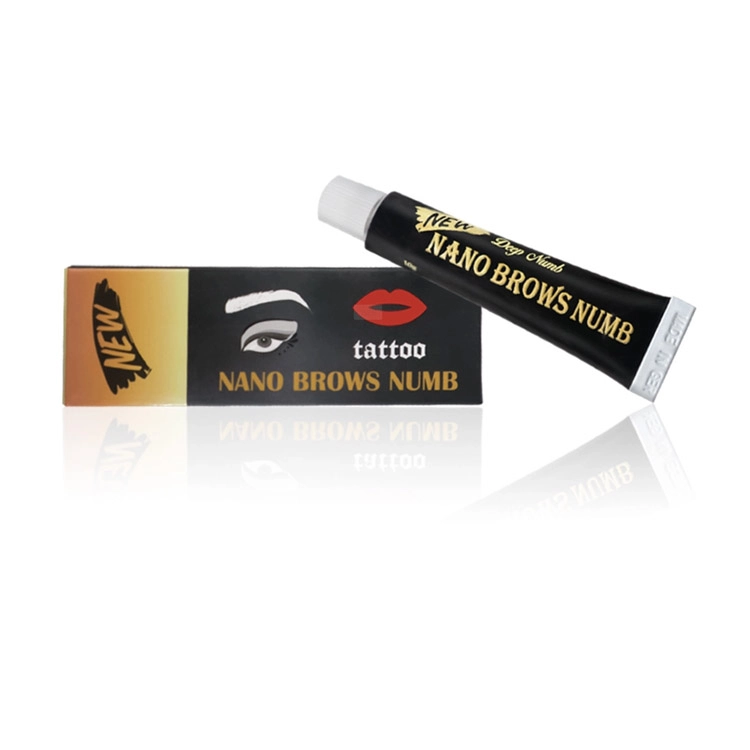
Where does numb cream work tattoo?
Tattoo numb cream mainly acts on the epidermis and dermis of the skin, blocking the transmission of nerve signals, thereby quickly relieving pain and discomfort.

Professional Pre Inked Eye Brow Mapping String 30m
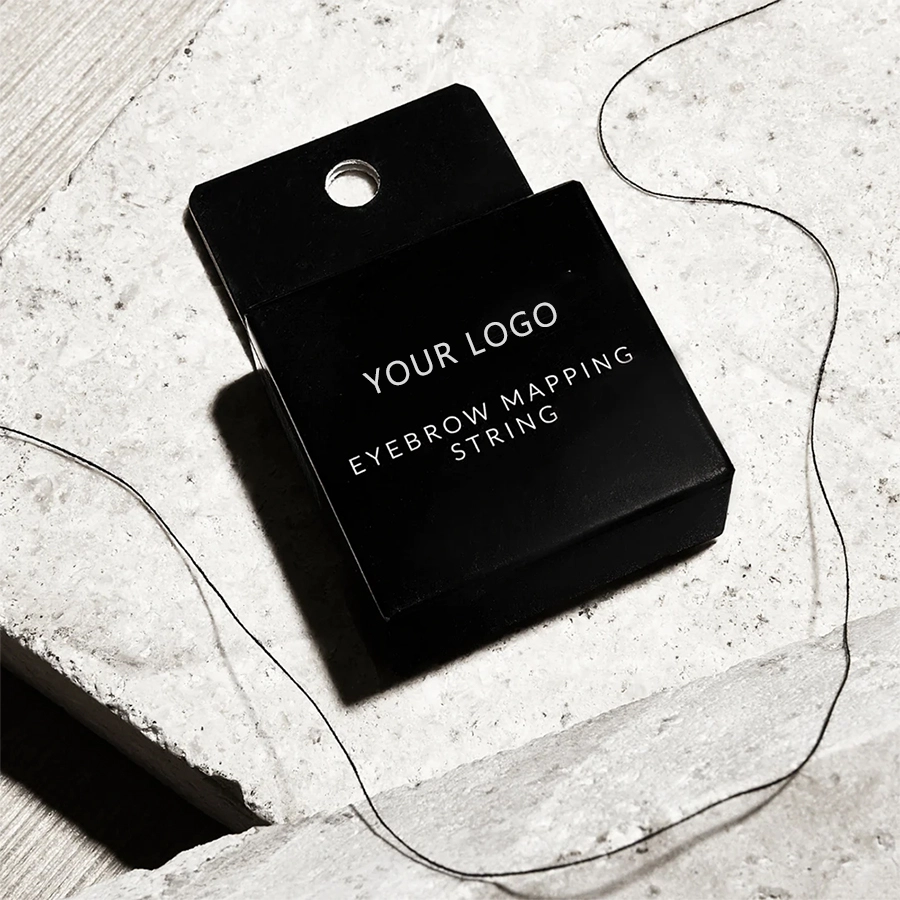
Microblading Pre-inked Mapping String Line 10m
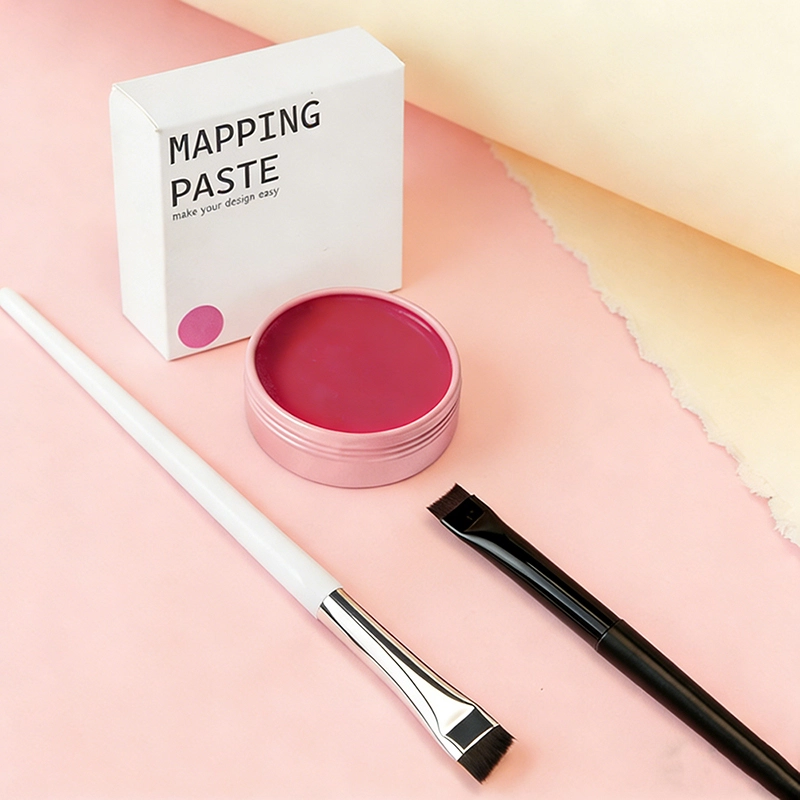
Pre-inked Mapping Ultra-Fine Eyebrows Eyeliner Blade Fan Brush

Instagram
Facebook
YouTube